Tips & Advice
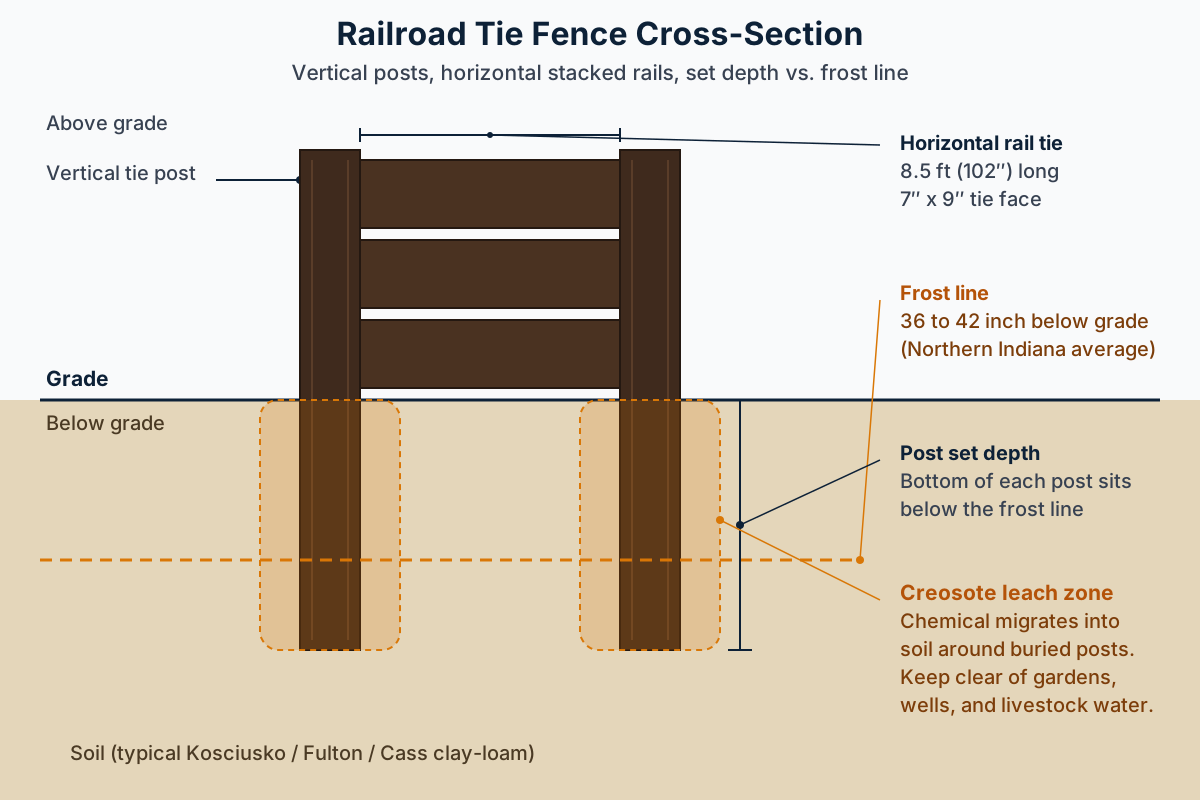
Railroad Tie Fences in Northern Indiana: What to Know
What a railroad tie fence actually involves in Northern Indiana, from creosote concerns to set depth, and what we install instead for the same rustic look.
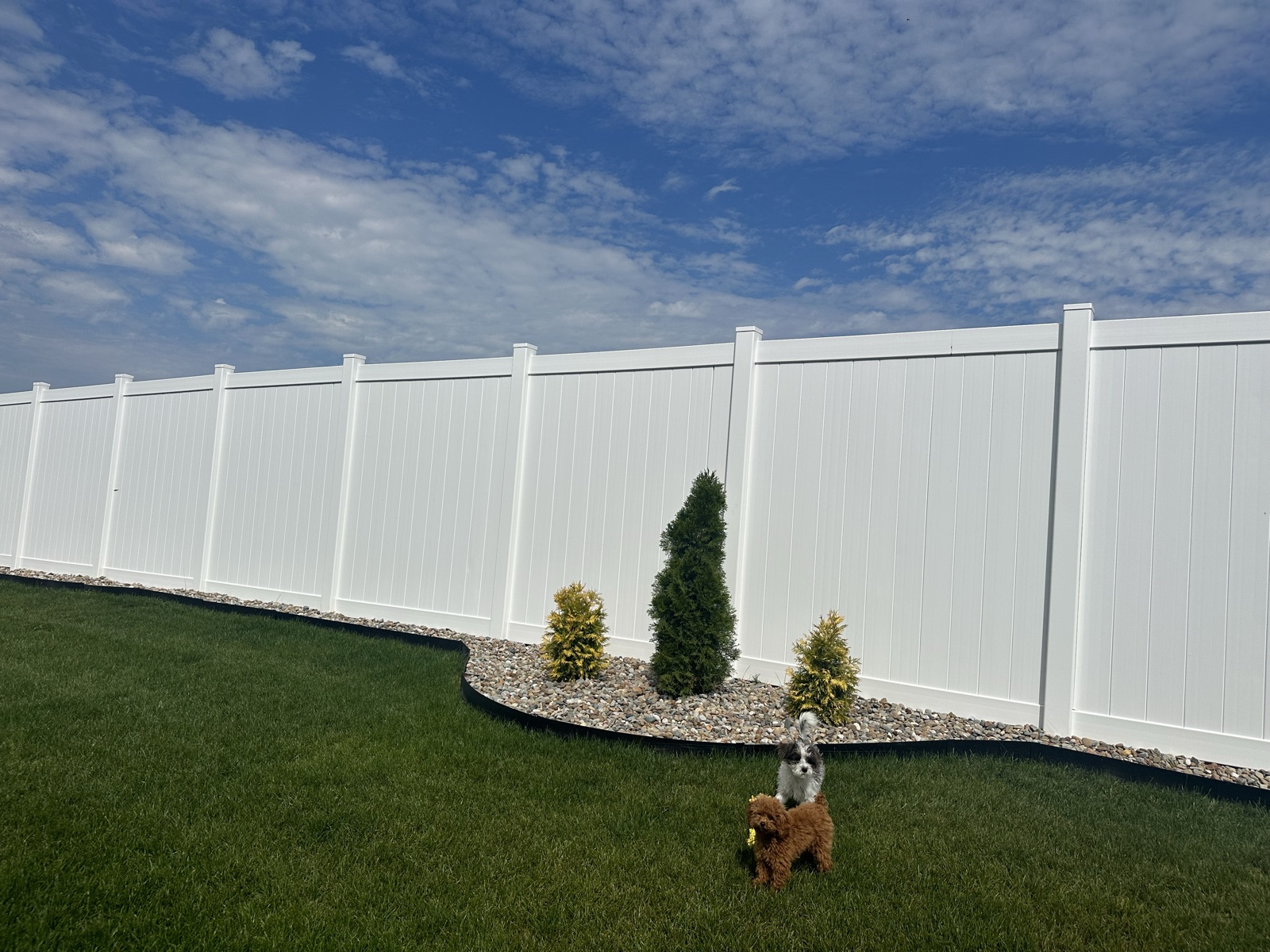
For most dogs in Northern Indiana, six feet of solid vinyl handles size, drive, and winter drifting better than any other option. Small calm dogs can go lower and cheaper. Jumpers, huskies, and diggers need the full setup: height, a sight barrier, and a plan for the ground under the fence.
I’ve built dog yards across Kosciusko County for 15 years, and the calls I get in January are never about the fence I installed. They’re about the fence that worked fine until a drift built up against it and the dog found a new way out. Height on paper and effective height in a Northern Indiana winter are two different numbers. Our dog fence installation page covers the builds that hold up, including buried bottom rails for diggers.
Size gets you in the right range. Temperament decides whether you need to go higher.
A small dog under 25 pounds, a beagle or a terrier, is contained by a 4-foot fence as long as nothing lets it squeeze through at the base. A medium dog, 25 to 60 pounds, a lab mix or a spaniel, needs 5 feet. A large dog, 60 to 90 pounds, a shepherd or a boxer, needs 6 feet minimum.
Then there’s the fourth category that changes everything: the jumper. A husky, an athletic mixed breed, or any dog with a track record of clearing obstacles needs 6 feet as a floor, not a ceiling. I’ve had customers add a foot of height mid-project after watching their dog clear a 4-foot temporary fence from a standstill. Athleticism beats breed stereotype, so watch what your dog actually does before settling on a number.
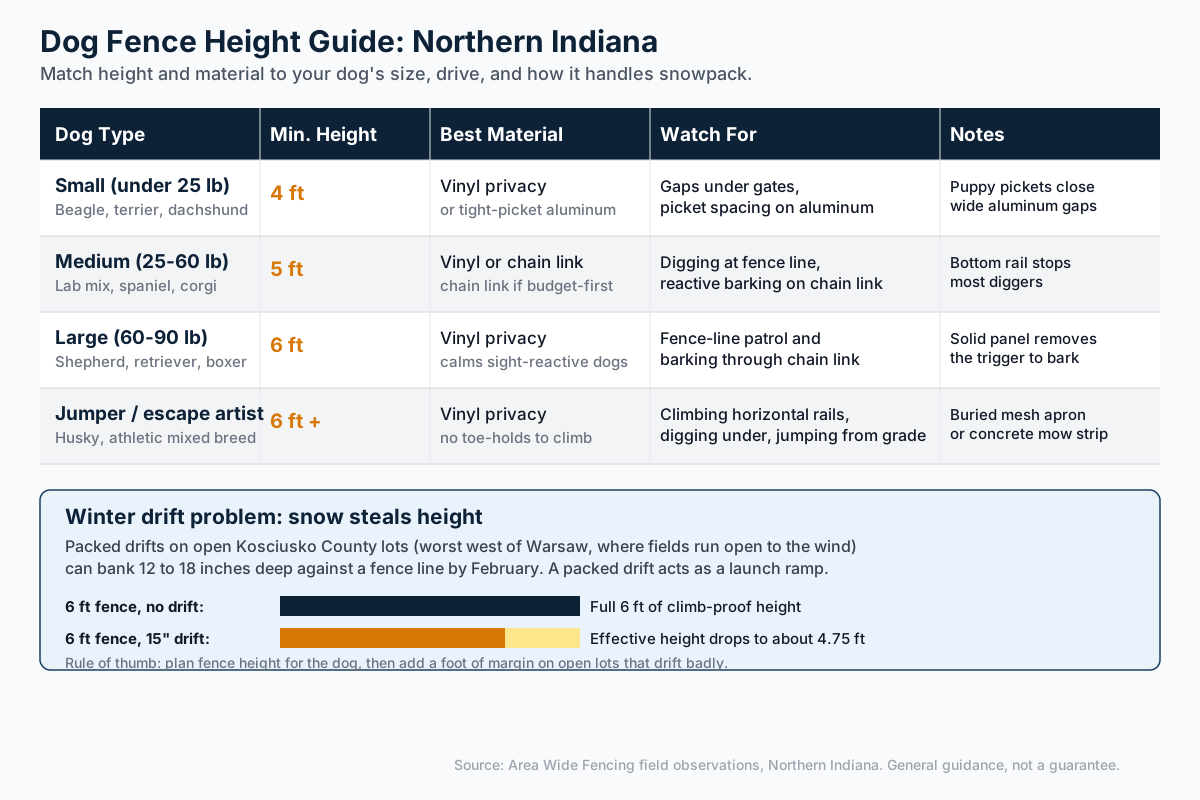
| Dog Type | Minimum Height | Best Material | Main Risk |
|---|---|---|---|
| Small (under 25 lb) | 4 ft | Vinyl or tight-picket aluminum | Gaps under gates and between wide aluminum pickets |
| Medium (25-60 lb) | 5 ft | Vinyl or chain link | Digging at the fence line |
| Large (60-90 lb) | 6 ft | Vinyl privacy | Fence-line patrol and barking through open materials |
| Jumper or escape artist | 6 ft or more | Vinyl privacy with a buried apron | Climbing, digging under, launching off a snow drift |
If your dog fits more than one row, size the fence for the more demanding one. A large dog with a jumping habit gets the jumper column, not the large-dog column.
This one surprises a lot of owners. A dog that can see through the fence, chain link, split rail, aluminum picket, has something to react to constantly: the mail carrier, a jogger, another dog three yards over. Those constant triggers drive fence-line pacing and nuisance barking.
A solid vinyl privacy fence removes the trigger. The dog can’t see what it wants to bark at, so a lot of reactive dogs settle down within a couple weeks of the panel going up. Removing the trigger this way is a big part of why solid vinyl is the most common choice we install for households with a large or vocal dog.
This isn’t universal. Some dogs do better able to see and assess what’s happening around them. But if your dog loses its mind every time someone walks by, sight-blocking material is worth trying first.
Chain link is the most common material we install for straightforward dog containment because it’s the cheapest per linear foot and holds up fine at the heights most dogs need. If your priority is keeping a dog in the yard for the least money, chain link at the right height does the job.
The trade-off is the sight barrier problem above. A dog behind chain link can see and hear everything on the other side, which is fine for a mellow dog and a headache for a reactive one. Some owners split the difference with privacy slats woven into the mesh, cutting cost against solid vinyl while blocking most of the view.
For actual current pricing, our full breakdown lives in chain link fence cost in Northern Indiana for 2026. That post owns the numbers and stays current as material costs move.
Diggers are the hardest containment problem in fencing, harder than height, because a determined digger doesn’t care how tall the fence is. Three fixes, in order of what we use most:
Bottom rail. A horizontal rail set low along the base of a vinyl or wood fence stops casual digging. Cheapest fix, handles most dogs.
Buried mesh apron. For serious diggers, we run galvanized mesh 12 to 18 inches underground along the fence line, angled outward. The dog hits mesh instead of open dirt and gives up faster than you’d expect.
Concrete mow strip. The most permanent fix, and the one we recommend for repeat diggers or landscaping you don’t want torn up. A poured strip along the base removes the soft dirt entirely.
Height solves climbing and jumping. Gaps solve squeezing, and they matter most for small dogs and puppies.
Standard aluminum picket spacing runs about 4 inches, fine for a full-grown large dog but wide enough for a puppy or a small breed to slip through. We add puppy pickets, extra vertical bars set between the standard pickets, to close that gap without switching materials. It’s a cheap add if you know you’re fencing for a small dog from the start.
Gates are the other failure point we see constantly. A gate that doesn’t self-close gets left open once, and once is all it takes. Self-closing hinges and a self-latching mechanism cost little relative to the whole project and remove the human-error factor.
This catches people off guard the first February after their fence goes in. Snow doesn’t just sit on the ground here, it drifts, and a drift against a fence line acts like a ramp.
On open lots west of Warsaw, where fields run flat and unbroken by tree lines, wind-driven snow piles against fences hard. I’ve seen drifts build 12 to 18 inches deep in a single bad week, packed firm enough to hold a dog’s weight. A 6-foot fence with an 18-inch drift against it is functionally a 4.5-foot fence, low enough for a lot of large dogs to clear.
There’s no way to prevent drifting entirely on an exposed lot, but you can plan around it. If your property sits open to the wind with nothing to break it, add 6 to 12 inches of height above what the dog alone would require.
A lot of calls from open-country properties near Logansport and Knox aren’t about a backyard at all. They’re about a farm dog with the run of several acres and a road somewhere on the property line.
Unfenced country dogs face a real road-danger problem that suburban dogs don’t. If your acreage runs to a county road, even a partial containment run along the road-facing side cuts the biggest risk without fencing the whole parcel. For larger perimeter runs on working land, our guide on field fence versus woven wire for hobby farms covers the material differences in full. That post owns the ag-fencing specs.
For a dog-specific containment area on acreage, we usually recommend fencing a defined yard near the house rather than the whole property. It’s cheaper and it’s where the dog spends most of its time anyway.
We get asked about invisible fence often enough to address it directly. Buried wire with a shock collar can work for containment on a calm, food-motivated dog where cost is the main constraint.
Here’s what it doesn’t do. It does nothing to stop another animal from entering your property, a coyote, a stray, a loose neighborhood dog. Your dog is exposed to whatever wanders in. It also won’t reliably hold a motivated dog, a husky mid-chase or a dog spooked by fireworks will run through the correction. And it does nothing for the barking and pacing a sight barrier solves.
If budget is the only reason you’re considering invisible fence over physical fencing, look at chain link again. At the right height it usually costs less than people assume, and it solves both problems. It keeps your dog in and other animals out.
Four things move the price of a dog fence: material, height, length, and site prep for digger countermeasures.
We quote based on an actual property walk, not a flat per-project number. A small flat lot and a sloped acreage run behave differently for post depth and material needs.
Most towns and townships around here have some form of containment or leash ordinance on the books, and the specifics vary by municipality. We won’t guess at statute numbers, they change town to town, so check with your local town hall before assuming your yard setup satisfies the law. Here’s what 15 years of installs tells us. A physical fence at the right height is the most reliable way to handle containment and keep your dog and your neighbors happy.
If your fence also has to handle a pool on the property, that’s a separate code question with its own height and gate-latch rules. Our Indiana pool fence requirements post covers the barrier code in full.
Every dog fence we build is a little different once you factor in the property, the breed, and how bad the drifting runs on that lot. If you want a straight read on what your yard needs, reach out and tell us about your dog and we’ll walk the property first.
Six feet, minimum, for anything in the 60 to 90 pound range or any dog with real jumping ability. A husky or an athletic shepherd mix can clear four feet standing still, so height is the first decision, not an afterthought.
Yes, and it’s the most affordable way to contain a dog. See our chain link fence cost guide for current pricing. The trade-off is your dog can see everything on the other side, which keeps some dogs patrolling and barking instead of settling down.
A buried mesh apron or a concrete mow strip along the fence line stops almost every digger. A bottom rail alone helps but a determined dog will still find the soft spot next to a post.
No. Buried wire and a shock collar only work on the dog wearing the collar. It does nothing to stop a coyote, a stray, or another dog from entering your property. It also won’t hold a motivated escape artist during a storm or a chase.
Yes. Packed drifts against a fence line on open lots can build 12 to 18 inches deep by February. That cuts a six-foot fence down to about four and a half feet of real climbing barrier, right where your dog is standing.
Chain link. It costs less per linear foot than vinyl or wood, and it still contains most dogs at the right height. It just won’t calm a reactive dog the way a solid panel does.
What a railroad tie fence actually involves in Northern Indiana, from creosote concerns to set depth, and what we install instead for the same rustic look.
Choose the right fence for Northern Indiana weather, soil, wind exposure, and winter freeze-thaw cycles.
Compare vinyl and wood fencing for Northern Indiana winters, including maintenance, lifespan, cost, and freeze-thaw performance.
Contact Area Wide Fencing & Deck Supplies for a free on-site estimate in Northern Indiana.