guides
Fence Removal Cost in Northern Indiana: Tear-Out Guide
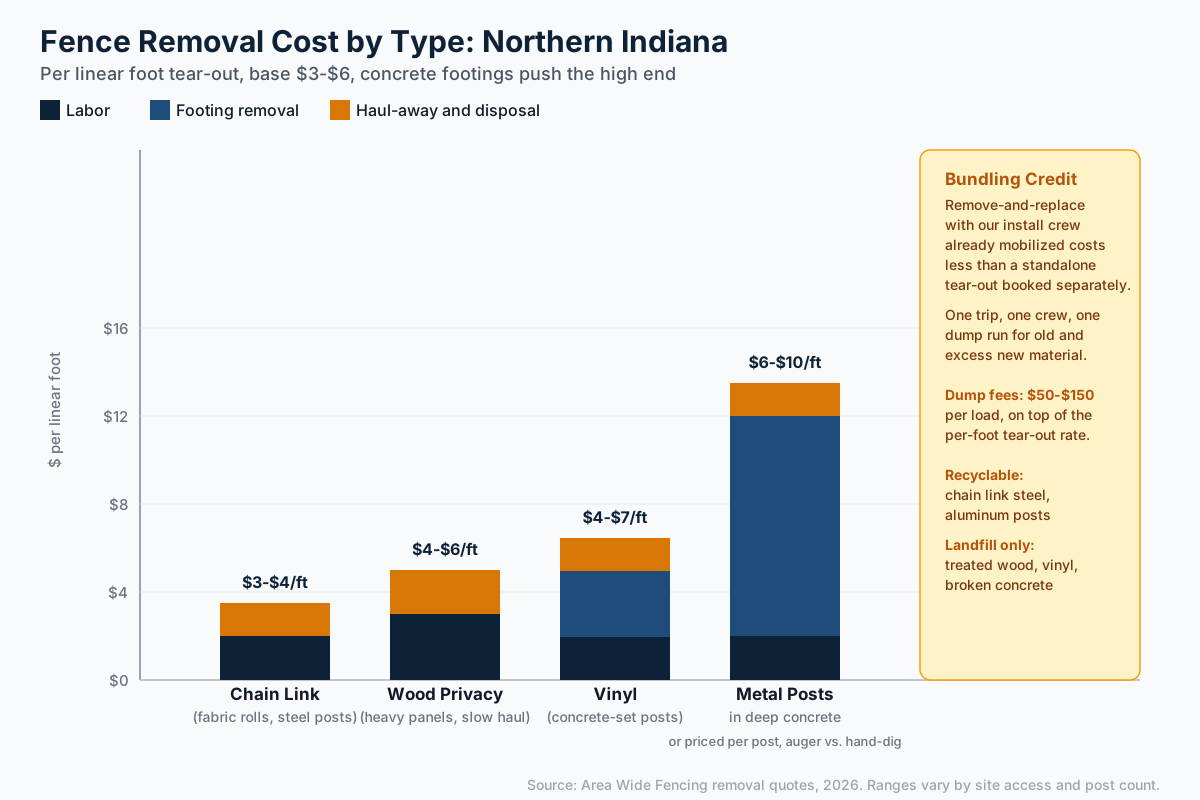
Fence removal in Northern Indiana runs $3 to $6 per linear foot for a basic tear-out, more when concrete footings and heavy haul-away are involved.
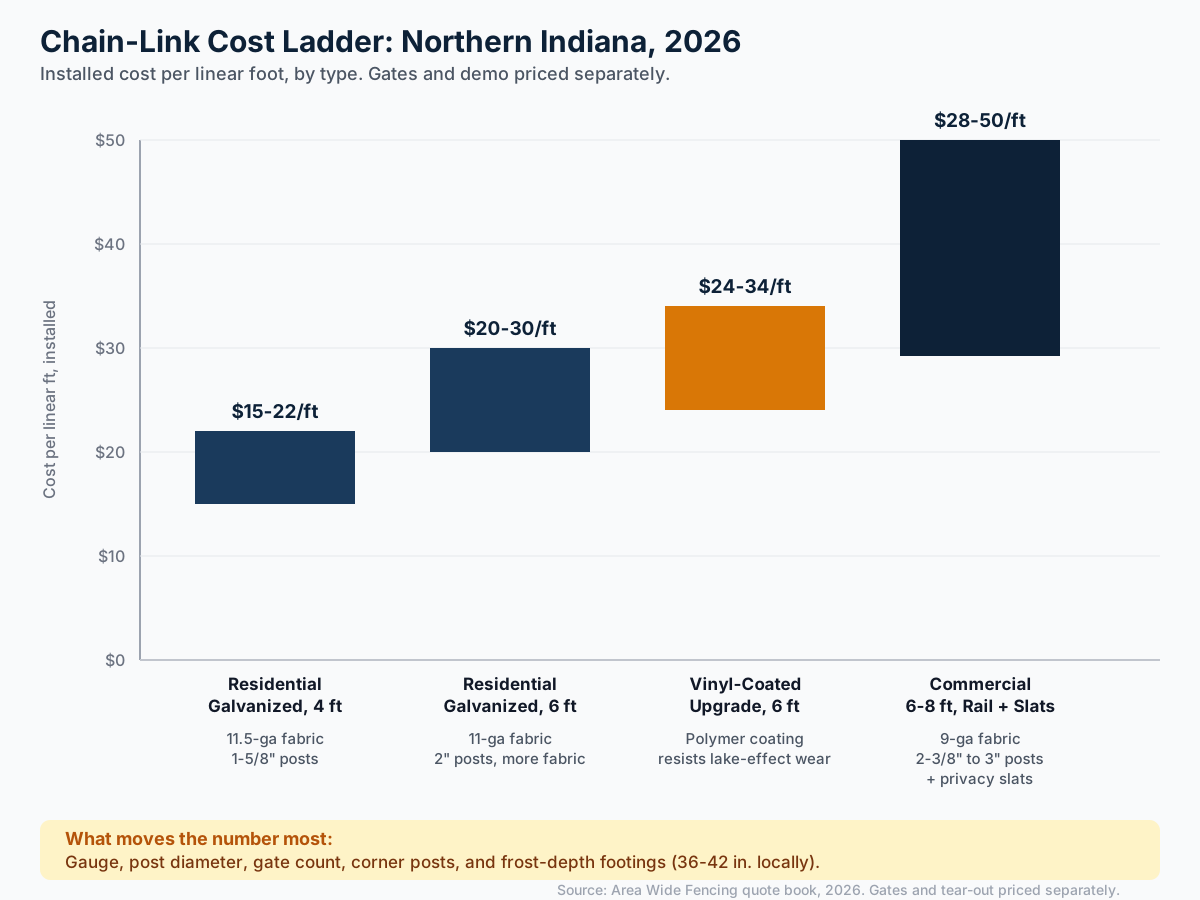
Installed chain-link runs $15 to $30 per linear foot for residential galvanized fence in Northern Indiana in 2026. Vinyl-coated adds a few dollars more. Commercial jobs with taller height, heavier gauge, and gates run higher, often $28 to $45 or more per foot.
I’ve set chain-link posts in Kosciusko County clay for 15 years. The question I get most isn’t “how much.” It’s “why is my neighbor’s quote so different from mine.” The answer is almost always one of three things. Gauge, post diameter, or how deep the crew is setting footings. Chain-link looks like the simplest fence to price. It isn’t.
This guide breaks down what’s actually inside a chain-link number in 2026, and what pushes a job to the high end of its range. It also covers where residential and commercial specs diverge, once you get past the basic fabric-and-post idea most people start with.
A chain-link quote isn’t one number. It’s fabric, framework, gates, and labor stacked together, and each piece moves independently.
Fabric is the mesh itself, sold by gauge. Framework is the line posts, terminal posts, top rail, and tension wire that hold the mesh taut. Gates are priced separately because the hardware and the extra post work add real labor. Labor covers digging, setting posts in concrete below frost depth, and stretching fabric to the right tension.
A few more line items show up on every honest quote. Permit fees where the municipality requires them. Concrete for footings. And demo of whatever fence is already there. That last one isn’t priced here on purpose. We break down real tear-out numbers in our fence removal cost guide for Northern Indiana. If you’re replacing an old fence, read that first so your budget accounts for both jobs.
These are real installed ranges for chain-link across our service area in 2026, covering fabric, framework, standard post spacing, and setting posts below frost depth. Gates and demo are priced separately.
| Type | Height | Cost per linear foot (installed) |
|---|---|---|
| Residential galvanized | 4 ft | $15 to $22 |
| Residential galvanized | 6 ft | $20 to $30 |
| Residential vinyl-coated | 6 ft | $24 to $34 |
| Commercial galvanized with top rail | 6 ft to 8 ft | $28 to $42 |
| Commercial with privacy slats added | 6 ft to 8 ft | $32 to $50 |
Residential 4-foot galvanized is the entry point, usually a yard boundary or a pool code perimeter where the goal is containment, not privacy. Six-foot residential is the common backyard security run. Commercial spec jumps because the fabric gauge, post diameter, and post spacing all step up at once, not just the height.
The height difference is the part homeowners notice. The spec difference underneath it is what actually separates a $20-a-foot backyard fence from a $40-a-foot equipment yard.
Residential jobs typically run 11 or 11.5-gauge fabric on 1-5/8 to 2-inch line posts, spaced every 8 to 10 feet, with posts set 24 to 30 inches deep. That’s plenty for a dog run, a pool barrier, or a property line in a subdivision.
Commercial jobs step up to 9-gauge fabric, the heavier standard for constant use and security applications. Line posts go to 2-3/8 inches, corner and gate posts to 3 inches, and post spacing tightens to hold tension on taller runs. Posts go 30 to 36 inches deep for 8-foot fence, deeper than residential because the wind load and fence height both increase the leverage on each post.
Our commercial fencing work runs this heavier spec by default. Equipment yards, storage lots, and light industrial sites near South Bend and Elkhart need a fence that holds up to daily gate traffic, not just weather.
Numbers in a table are useful. A real job shows how they add up. Last year we installed 450 linear feet of 8-foot galvanized chain-link for an equipment storage yard in Plymouth, Marshall County.
The spec was 9-gauge galvanized fabric on 2-3/8 inch line posts with 3-inch corner and gate posts, standard commercial grade for that height. The property needed two 16-foot double drive gates so trucks and equipment could move in and out without a bottleneck. Posts went in 30 to 36 inches deep, cured overnight, then we strung fabric and tension wire over the next two days. Gate frames and hardware went in on day four.
Past the per-foot number, a commercial-spec job means four things. Heavier fabric, bigger posts, and deeper footings. Then gate hardware sized for equipment, not for a homeowner walking a dog through twice a day. You can see the full breakdown, including before and after photos, on our Plymouth commercial chain-link project page.
Five things move a chain-link number more than anything else once you’re past the base per-foot rate.
Gauge. The difference between 11.5-gauge and 9-gauge fabric is thickness, and thickness is durability. Thinner gauge costs less but dents and sags sooner. Heavier gauge costs more upfront and holds tension for decades.
Framework diameter. Bigger posts and top rail cost more in raw material and take longer to set. A 3-inch commercial corner post needs a bigger auger hole and more concrete, on top of the heavier steel.
Height. Going from 4-foot to 6-foot adds fabric and usually bumps the post spec. Going from 6-foot to 8-foot for a commercial job adds framework diameter on top of the extra fabric.
Corner and terminal posts. Every corner, every gate, and every dead-end run needs a terminal post set in more concrete than a standard line post. A terminal post carries the tension pull of the whole run, instead of just holding fabric up. A fence line with several corners costs more per foot than a straight run of the same length.
Gates. A single residential walk gate runs $200 to $400 installed. Commercial drive gates, like the double 16-foot gates on the Plymouth job, run into the thousands once you count the extra posts, hardware, and hanging labor. See our full gate options for what’s available.
Clay soil and frost depth. Kosciusko and Marshall County clay holds water and heaves harder in a freeze-thaw cycle than sandy soil does. Posts set to the full 36 to 42-inch frost depth take longer to dig and use more concrete, which shows up as a modest add on rocky or heavy-clay lots.
Plain galvanized chain-link holds up fine across most of Northern Indiana. Near the lakes and along salted roads, vinyl-coated earns its extra cost.
Lake-effect winters mean more freeze-thaw cycles, more road salt spray near plowed streets, and more standing moisture around post bases in spring thaw. Galvanized coating protects the steel underneath, but the coating itself can scratch or chip over years of mowing, string trimmers, and general yard wear. Once the galvanizing is broken, rust starts at that exact spot.
Vinyl-coated fabric wraps the galvanized wire in a polymer layer that resists scratches better and doesn’t show surface rust the same way. It costs $3 to $5 more per linear foot than plain galvanized. We recommend it for any property within a mile or two of Wawasee, Tippecanoe, or Maxinkuckee, or along a heavily salted county road.
Both coatings meet the same structural spec. The choice is about how the fence looks and holds up over 20-plus years, not how strong it is on day one.
Get three quotes on the same fence line and you’ll usually get three different numbers, sometimes a wide spread. Here’s what’s actually driving that.
The biggest variable is spec, not markup. A quote using 11.5-gauge fabric on 1-5/8 inch posts will always come in under a quote using 11-gauge on 2-inch posts, even for the identical linear footage. Neither number is wrong. They’re pricing different fences.
Post depth is the second variable, and it’s the one that’s easiest to hide. A crew setting posts 18 inches deep moves faster and costs less than a crew setting them to the full frost line. The shallow fence looks identical on install day. It starts leaning by the second winter.
The third variable is what’s included. Some quotes bundle permit fees, tear-out of the old fence, and dump fees into the number. Others quote the fence alone and add everything else after you’ve signed. Ask for a line-item breakdown before comparing two totals side by side.
You can get close to a real number before we ever walk the property. Here’s the process.
Measure the run. Walk the fence line with a tape measure or measuring wheel and round up to the nearest 10 feet.
Pick height and coating. Residential backyard security is usually 4 or 6-foot galvanized. Pool code and containment runs often stay at 4-foot. Lakefront or high-visibility properties lean vinyl-coated.
Count gates and corners. Each gate and each corner post adds cost beyond the straight per-foot rate. A rectangular yard with four corners and one gate prices differently than a long straight boundary run with none.
Multiply and add. Take your linear footage times the midpoint of the per-foot range for your height and coating. Then add $250 to $400 per residential gate. For drive gates, ask for a separate commercial gate estimate.
For a 150-foot residential backyard in 6-foot galvanized with one walk gate, that math runs: 150 x $25 = $3,750, plus $300 for the gate, equals roughly $4,050. Real quotes on comparable jobs usually land within 10 to 15 percent of that, depending on soil and corner count.
Not every property owner wants installation. Contractors, farmers, and DIY-inclined homeowners across our service area buy fabric, posts, gates, and hardware direct through our wholesale supply program out of our Warsaw location.
Wholesale pricing works whether you’re a contractor stocking a job or a homeowner comfortable setting posts and stretching fabric yourself. We stock both galvanized and vinyl-coated fabric in residential and commercial gauge, along with the framework and gate hardware to match. If you get partway through a DIY chain-link job and want a professional finish on gates or tension, we can pick up mid-project too.
Chain-link isn’t the right material for every job. If privacy is the goal, vinyl fencing runs higher per foot but blocks sightlines completely, which chain-link never will. If you’re fencing a yard specifically for a dog, the open mesh has real tradeoffs worth reading before you commit. Our best fence for dogs in Northern Indiana guide covers them. And if you’re fencing acreage or livestock rather than a yard or a lot, chain-link usually isn’t the right tool at all. Compare it against woven wire in our field fence vs. woven wire guide for hobby farms before you price a rural boundary in chain-link.
For a straightforward residential security fence, a pool barrier, or a commercial perimeter where visibility matters as much as containment, chain-link remains the most cost-efficient option we install. See the full range of our chain-link fencing options for what’s available in 2026.
Residential galvanized chain-link runs $15 to $30 per linear foot installed in 2026, depending on height and gauge. Vinyl-coated adds a few dollars per foot. Commercial jobs with heavier gauge, taller height, and drive gates run higher, often $28 to $45 or more per foot.
In most of Northern Indiana, yes. The coating protects the galvanized steel from the scratches and moisture that lake-effect winters throw at a fence line, and it holds up better around road salt. It costs a few dollars more per foot than plain galvanized but rarely needs replacing sooner.
Commercial chain-link uses heavier gauge fabric, usually 9-gauge versus 11 or 11.5-gauge residential, plus larger diameter posts and closer post spacing. It’s built for taller heights, gate traffic, and constant use, which is why it costs more per foot than a residential backyard fence.
Gauge, post diameter, and post depth are the usual culprits. A quote that looks cheap is often thinner fabric, smaller posts, or shallower footings that won’t hold through a Northern Indiana frost cycle. Always ask for the gauge and post spec in writing before comparing two numbers.
No, tear-out is a separate line item on every honest quote. We price it based on what’s coming out and how it’s anchored. See our full breakdown on fence removal cost in Northern Indiana for real numbers.
Yes. We sell chain-link fabric, posts, gates, and hardware at wholesale prices to contractors and DIY property owners through our wholesale supply program at our Warsaw location.
Fence removal in Northern Indiana runs $3 to $6 per linear foot for a basic tear-out, more when concrete footings and heavy haul-away are involved.
Real 2026 deck cost ranges for Warsaw, Indiana. Pressure-treated vs composite, railing options, footing depth, and what actually moves your price.
Installed aluminum fence in Northern Indiana runs $28 to $72 per foot depending on grade. Here's what the wall thickness, rails, and styles actually buy.
Contact Area Wide Fencing & Deck Supplies for a free on-site estimate in Northern Indiana.