guides
Fence Removal Cost in Northern Indiana: Tear-Out Guide
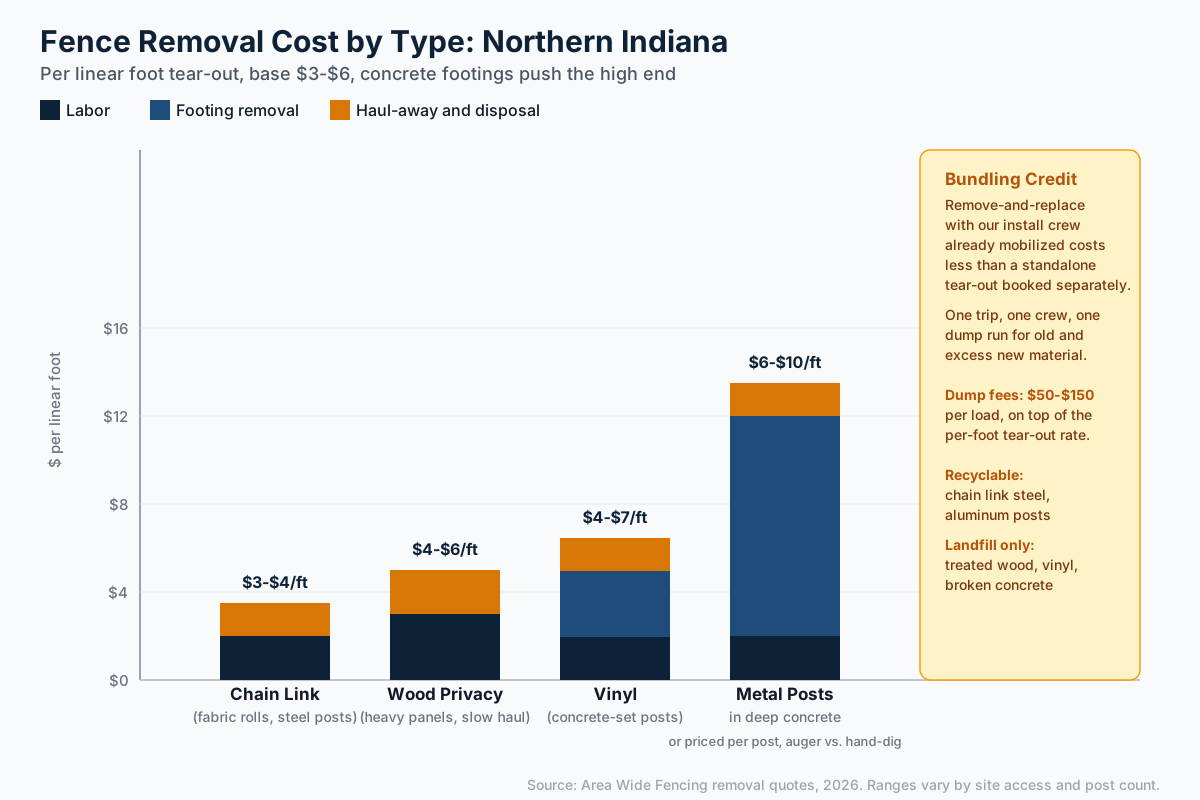
Fence removal in Northern Indiana runs $3 to $6 per linear foot for a basic tear-out, more when concrete footings and heavy haul-away are involved.
A 12x16 pressure-treated deck in Warsaw runs about $7,700 to $11,500 installed in 2026. The same footprint in mid-range composite runs $12,000 to $15,500. Railing choice, footing depth, and site slope move the number more than square footage does.
I’ve priced and built decks across Kosciusko County for 15 years. Flat backyard lots in Winona Lake. Sloped shoreline builds on Tippecanoe, where the frost line and the water table both fight you. The number a homeowner sees online almost never matches what actually gets quoted. Online calculators don’t know your soil, your slope, or how far your footings have to go below grade here.
This is the pricing breakdown I’d give someone standing in my office. Real 2026 ranges, the full cost stack, and the decisions that swing the total by thousands.
Pressure-treated decking installed in the Warsaw area runs roughly $40 to $60 per square foot. Composite runs $60 to $95 per square foot depending on board line and railing. A 192-square-foot deck (12x16) lands between $7,700 and $18,400 depending on material tier and railing.
That range is wide on purpose. A basic pressure-treated deck and a loaded composite deck with premium aluminum rail aren’t the same project, even at the same footprint. The chart below breaks out where the money goes.
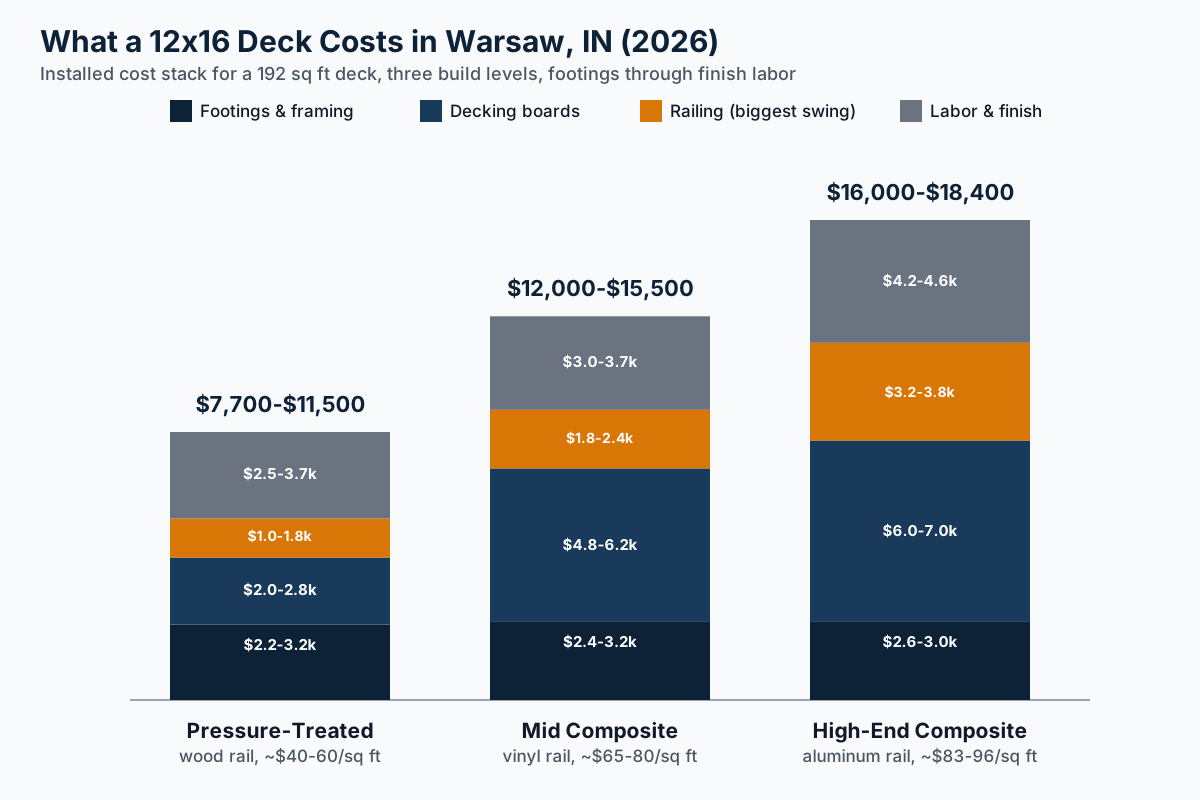
Every deck quote breaks into the same four buckets, whether it’s pressure-treated or composite. Understanding what’s in each one is the difference between comparing quotes and just comparing bottom-line numbers.
Footings and framing. Concrete footings set below the frost line. The ledger connection to the house, or freestanding posts if it isn’t attached. Then joists and the beam that carries the load. This is the part nobody sees once decking goes down, and it’s the part that determines whether the deck is still square in ten years.
Decking material. The boards themselves. Pressure-treated lumber is the budget option. Composite comes in tiers from entry-level capped composite up through premium multi-tone board lines, and the tier you pick is one of the biggest swings in the whole project.
Railing. Covered in detail below, this is the single line item that varies the most between two decks of identical size.
Labor and finish. Installation labor, stairs, fasteners, hardware, and site cleanup. This bucket grows with complexity: more stairs, more angles, more site access problems.
Supplying your own materials changes this math directly. We run a deck and fence supply operation in Warsaw. DIY builders can buy the same decking, railing, and hardware our crews install. That cuts the installed price roughly in half, in exchange for doing the labor themselves. If you’d rather hire the whole job out, our full deck services page covers that route, and the material list is identical either way.
| Factor | Pressure-Treated | Composite |
|---|---|---|
| Installed cost per sq ft | $40 to $60 | $60 to $95 |
| Upfront cost, 192 sq ft | $7,700 to $11,500 | $12,000 to $18,400 |
| Lifespan | 15 to 20 years with maintenance | 25 to 30+ years |
| Maintenance | Restain or seal every 2 to 3 years | Wash annually, no staining |
| Splintering | Yes, especially after a few winters | No |
| Fade and color | Grays without maintenance | Holds color, some fade over decades |
| Lakefront humidity performance | Struggles, more frequent maintenance | Handles it well |
| Feel underfoot in summer sun | Cooler than dark composite | Some board lines run hot in direct sun |
Our full breakdown of composite decking boards and construction lives on the composite decking page, and the wood-specific detail is on the pressure-treated decking page. Read either one before you decide between the two.
The sticker price tells half the story. Pressure-treated is cheaper to build and more expensive to own. Here’s the actual math homeowners in Warsaw and Winona Lake are working with.
A pressure-treated deck needs restaining or resealing every 2 to 3 years to hold up against Northern Indiana’s freeze-thaw cycle and summer humidity. Skip that maintenance and the boards gray, splinter, and start cupping within 5 to 7 years. Budget $400 to $800 per restain on a 192-square-foot deck, done every 2 to 3 years for the life of the deck.
Composite skips that cycle entirely. You hose it off once or twice a year. No stain, no sealer, no sanding splinters out of a kid’s foot in July.
Run 15 years on both. Pressure-treated at the low end of its cost range, plus 5 to 6 restain cycles, often lands within a few thousand dollars of composite’s higher upfront cost. And composite is still standing at year 25. A maintained pressure-treated deck is closer to needing board replacement by then. If you plan to own the house past year 10, composite usually wins on total cost. If you’re building for a shorter hold or a tighter budget right now, pressure-treated is the honest, defensible choice.
Railing is where two decks of the same footprint end up thousands apart. It’s also the item homeowners underestimate most when they’re pricing a project in their head.
Wood railing is the cheapest option and matches a pressure-treated deck’s look, but it’s on the same restain schedule as the decking and it’s the first thing to show wear.
Vinyl railing costs more than wood upfront, needs no staining, and holds up well in most yard conditions. Details and pricing structure live on the vinyl railing page.
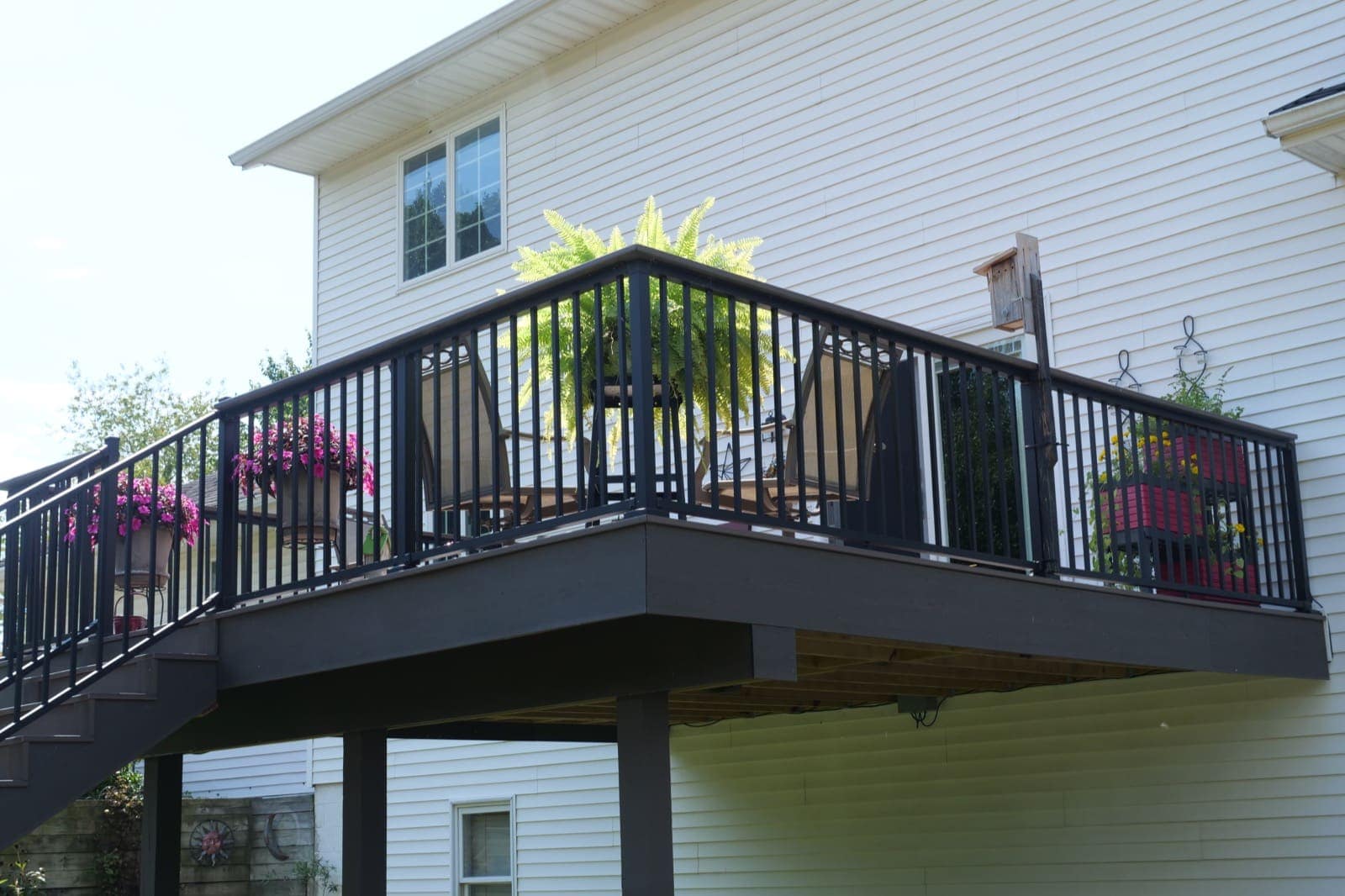
Aluminum railing costs the most per foot but needs the least upkeep of the three. It holds a powder-coat finish for decades. It’s the standard choice for lakefront decks, because it doesn’t absorb moisture the way wood does. Full detail is on the aluminum railing page.
On a 40 to 50 linear-foot railing run, the gap between wood and aluminum can be $1,500 to $3,000 by itself. That’s a bigger swing than upgrading from a mid-tier composite board to a premium one.
Two decks with identical dimensions can quote thousands apart because of what’s under and around them. These are the site conditions that actually change a number:
None of these show up on a generic online deck calculator. They show up on the estimate after we’ve walked the actual lot.
Lake property changes the deck math beyond just railing material. On Lake Tippecanoe and similar Kosciusko County shorelines, humidity, direct water exposure, and softer bank soil all push toward heavier-duty materials and deeper footings than a standard backyard build.
We ran exactly this kind of project on a Lake Tippecanoe property: elevated dock-level deck railing plus shoreline fencing, both built to handle year-round water exposure. You can see the full scope on our Lake Tippecanoe lakefront railing project page. Posts on that job went 42 inches deep on the shoreline side, deeper than a standard yard fence or deck post. That accounts for erosion and the softer soil right at the water’s edge.
Our lakefront decking page covers the broader material and construction approach we take on any lake property in the county. If your project is a lake build, expect the quote to run above a standard backyard deck of the same size. That comes down to footing depth and railing material. Lakefront work isn’t priced differently on principle.
Stairs add real cost, not a token amount. Every step needs consistent rise and run, and any run of four or more risers needs a code-compliant handrail. A simple two-step stair section can add a few hundred dollars; a full stair run off a second-story or walkout deck adds considerably more.
Permits are a separate cost from the deck itself, and every jurisdiction in our service area handles them a little differently. We don’t restate the county-by-county detail here. Our deck permit guide by county already covers which office to call, what triggers a permit, and how DNR review factors into lakefront builds. Read that post if permitting is your main question; this one is about the dollars.
Most homeowners in Warsaw book a deck in late summer, once they’ve spent one more season without it. That fills our spring and early-summer calendar first. By September, crew schedules open back up and the ground is still workable for footings before winter.
A fall build also cures fully before spring, so the deck is ready for furniture and a grill when cookout season starts. Material cost doesn’t change by season, but booking in September or October often gets a faster start date than calling in June for a deck by July 4th.
Not every backyard upgrade is a deck. Weighing a deck against a shade structure instead of a walking surface? Our pergola versus gazebo comparison covers that decision separately. Our pergola page has the build detail if that’s the direction you’re leaning. A deck gives you a permanent, load-rated surface; a pergola gives you shade over an existing patio or deck. Plenty of Warsaw yards end up with both, built in stages.
If you’re also comparing deck cost against a fence project on the same property, our aluminum fence cost and styles guide covers that pricing separately. No mixing two different cost stacks in your head.
Every range in this post is a starting point, not a quote. The only way to get a real number is a site visit. We check your soil, your slope, your access, and your existing structure if it’s a repair or replacement job. We build decks throughout Warsaw and the surrounding lake communities, and every quote reflects the property in front of us, not a national average.
Request a free estimate and we’ll walk your lot, talk through pressure-treated versus composite for your budget and timeline, and give you a written number before any work starts.
A 12x16 pressure-treated deck runs roughly $7,700 to $11,500 installed. The same footprint in mid-range composite runs $12,000 to $15,500, and high-end composite with aluminum railing runs $16,000 to $18,400. Railing choice and decking tier move the price more than square footage alone.
For most homeowners planning to stay 10 or more years, yes. Composite costs more upfront but skips the restaining cycle pressure-treated wood needs every 2 to 3 years. Run the 15-year math for your situation, since a deck you might sell the house under changes the answer.
Material. Wood railing is the cheapest option. Vinyl and aluminum cost more per linear foot but need far less upkeep. Aluminum is the standard pick for lakefront decks, since it handles humidity without rotting or needing to be restained.
Below the frost line, treated locally as 36 inches minimum with 42 inches common on exposed or lakefront lots. Shallow footings heave as the ground freezes and thaws, which tilts posts and cracks concrete within a few winters.
Yes. A sloped lakefront lot or a walkout basement deck needs taller posts and more footings. Sometimes it needs engineered beams to carry the extra height and span. All of that adds cost over a flat-yard deck of the same square footage.
Often the best time. Ground stays workable, and crews have more open dates after the summer rush. A fall build also means the deck is fully cured and ready for furniture when spring entertaining season starts.
Fence removal in Northern Indiana runs $3 to $6 per linear foot for a basic tear-out, more when concrete footings and heavy haul-away are involved.
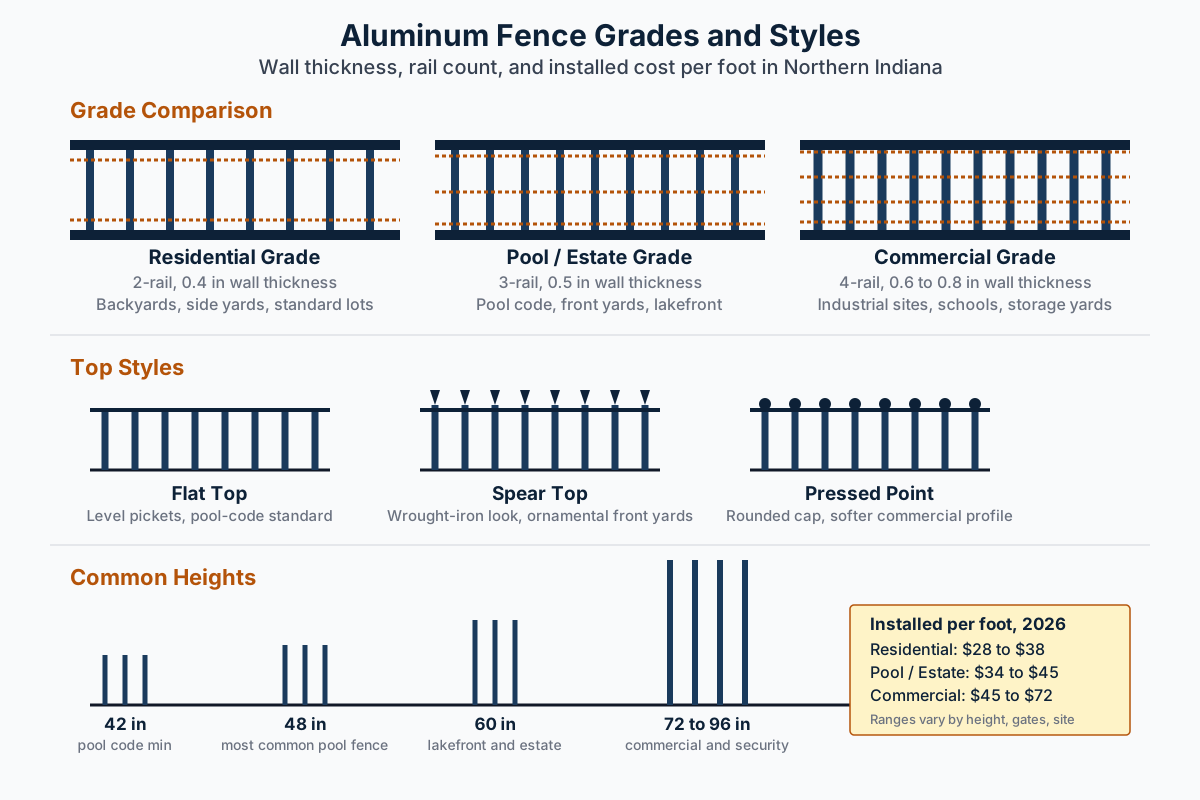
Installed aluminum fence in Northern Indiana runs $28 to $72 per foot depending on grade. Here's what the wall thickness, rails, and styles actually buy.
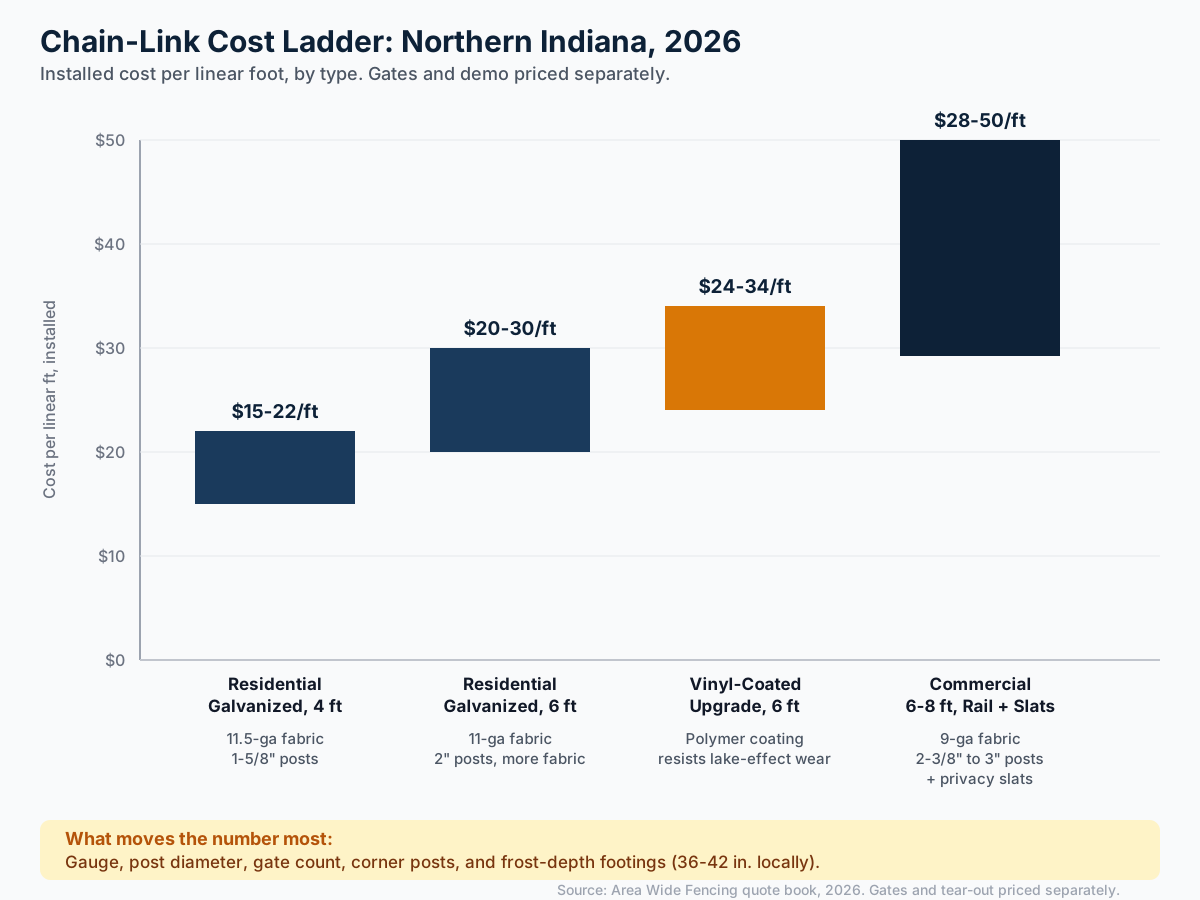
Installed chain-link in Northern Indiana runs $15 to $30 per foot residential, more for commercial. See what actually moves the number in 2026.
Contact Area Wide Fencing & Deck Supplies for a free on-site estimate in Northern Indiana.