Local News
Picket Fence Styles for Warsaw Homes: A Local Guide
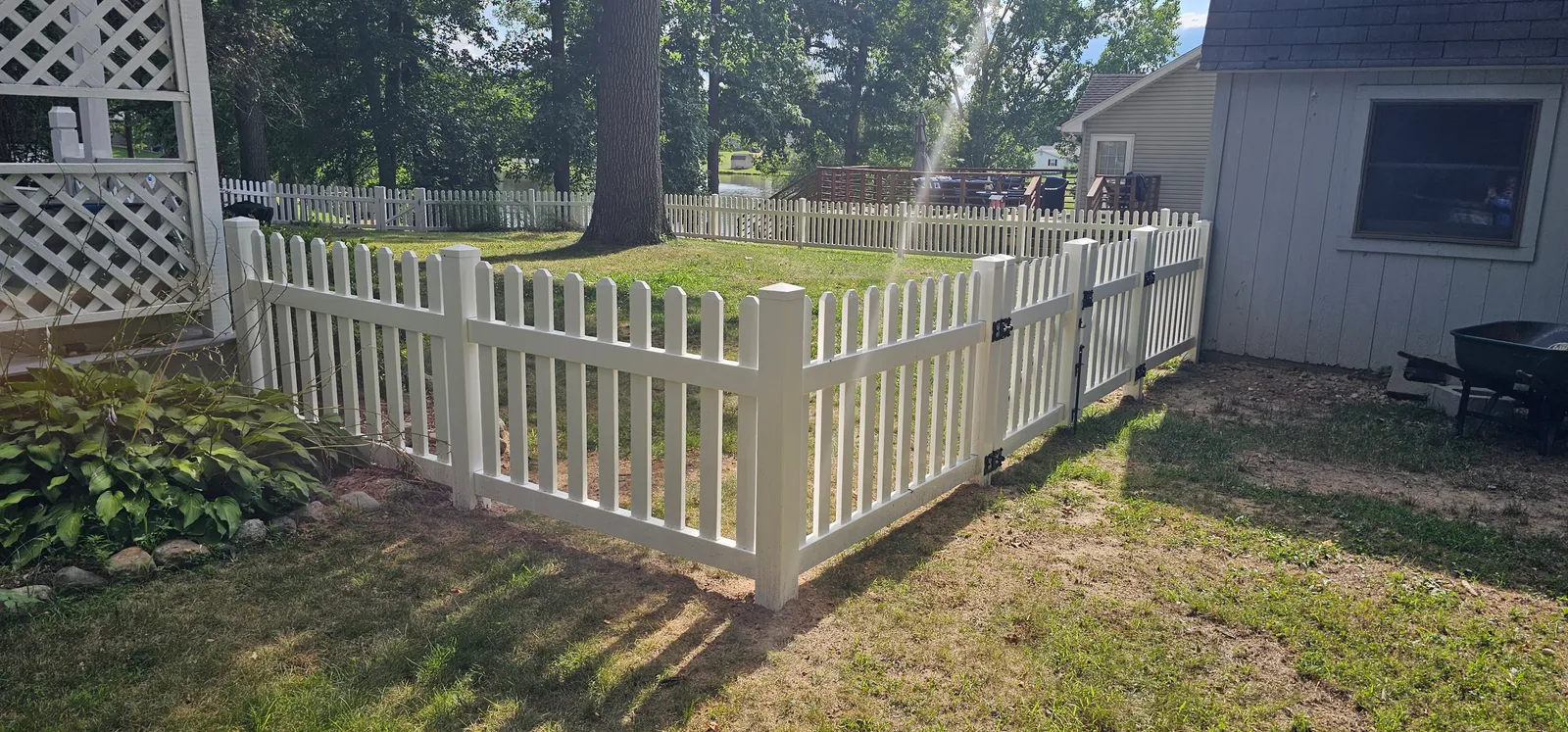
A Warsaw contractor's guide to picket fence caps, top lines, heights, spacing, and materials for front yards in Warsaw and Winona Lake, Indiana.
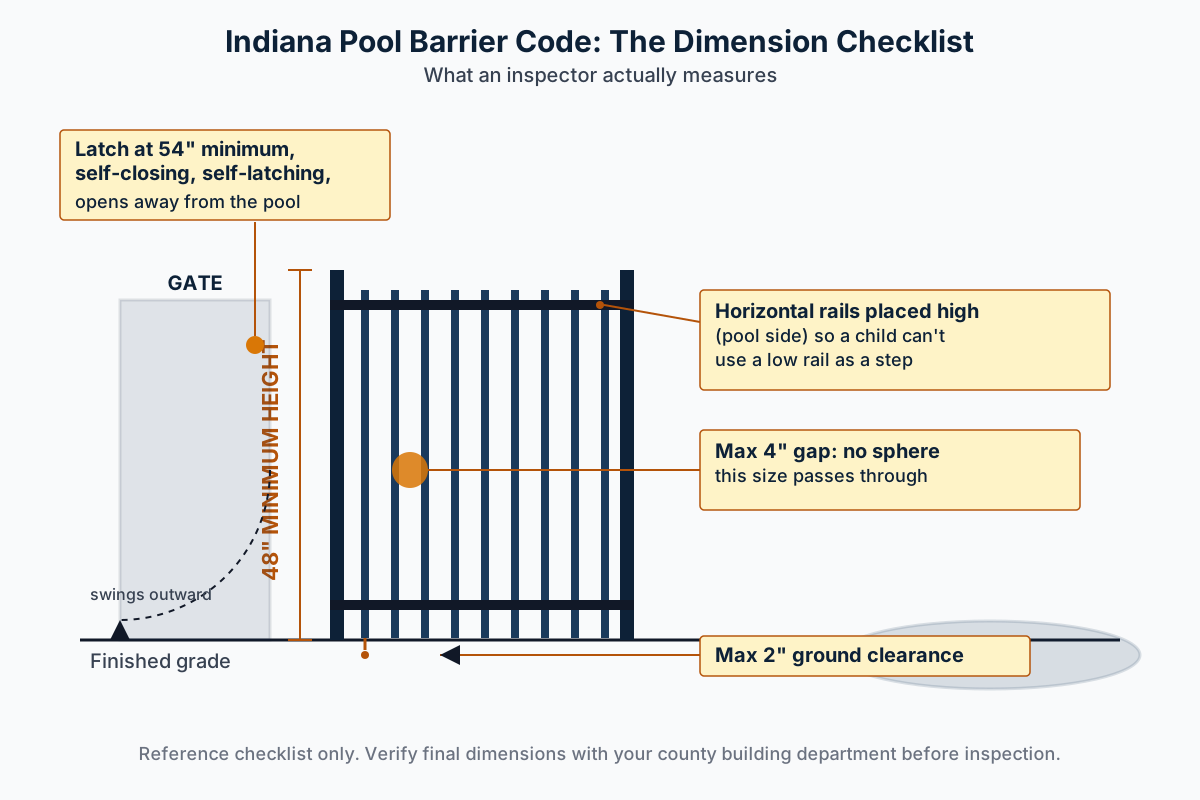
Indiana requires a compliant barrier around any in-ground pool and most above-ground pools. That usually means 48 inches tall, with no more than a 4-inch gap and no way for a small child to climb it. The gate has to be self-closing and self-latching. The rules come from Indiana’s pool code family (675 IAC 20), enforced locally by your county or city building department.
I’ve built pool fences in Kosciusko County for 15 years, and the barrier inspection is the one part of a pool project homeowners underestimate. You can spend six figures on the pool and still fail inspection because a gate swings the wrong way. This is the checklist I walk every pool client through before we cut a single post hole. Our pool fence installation page covers the build and how we confirm the requirement with your building department.
Any in-ground pool needs a compliant barrier around it, full stop. Most above-ground pools do too, with one exception. The pool structure can serve as its own barrier if two things are true. The wall is at least 48 inches tall on the outside, and the only way in is a ladder that locks, retracts, or gets removed between uses.
That exception gets misused constantly. A 48-inch above-ground pool with a ladder left down overnight is an open invitation, not a compliant barrier. Most above-ground jobs we build in Kosciusko and Elkhart counties still get a fenced enclosure because homeowners don’t want to manage a ladder every evening.
Hot tubs and spas are the real exception. A lockable, ASTM-rated safety cover that’s actually used covers the barrier requirement for most inspectors. Once that cover comes off for the season, you’re back to needing a fence or an equivalent enclosure.
This is the part an inspector measures with a tape, not a guess. Every number below shows up across Indiana’s pool code adoption and the county amendments layered on top of it.
| Requirement | Minimum standard |
|---|---|
| Barrier height | 48 inches from finished grade |
| Gap or opening size | No opening large enough to pass a 4-inch sphere |
| Ground clearance | No more than 2 inches between the bottom of the barrier and grade |
| Climbable horizontal members | Rails spaced to prevent use as a foothold; if members sit below 45 inches apart they need to face the pool side |
| Gate hardware | Self-closing, self-latching, latch release at least 54 inches high, opening away from the pool |
Every one of those lines gets checked on the walk-through. Miss the ground clearance under a gate by half an inch on uneven Kosciusko clay and you’ll hear about it before the pool ever gets water in it.
The gate is the single most common reason a pool barrier fails inspection. It’s not the fence, it’s the door in the fence.
The latch release has to sit at least 54 inches above grade, on the pool side of the gate, so a small child can’t reach up and pop it open. The gate has to swing outward, away from the pool, and close and latch on its own without anyone pushing it shut. A gate propped open with a hook or a brick defeats the point and will get flagged.
We install pool-rated gates with spring hinges and a magnetic or mechanical self-latching mechanism built for this application, not hardware store parts. Cheap self-closing hinges bind up in cold weather, which means the gate that passed inspection in June is standing open by October.
A lot of Northern Indiana pools sit close to the house. Homeowners want to use the house wall as one leg of the enclosure instead of fencing the whole perimeter. Indiana’s code allows this, but the tradeoff shows up at every door that opens onto the pool area from that wall. A sliding door, a walkout basement door, or a patio door typically needs an audible alarm. The alternative is a self-closing, self-latching device mounted high enough that small children can’t reach it.
This setup works well on lake properties where the house sits between the pool and the water, and fencing the whole perimeter would block the view too. We see it often on lakefront builds near Lake James. The house anchors one side of the barrier, and aluminum picks up the rest without blocking sightlines to the water.
If you’re relying on the pool wall as the barrier instead of building a separate fence, the ladder is the weak point. Indiana’s code family expects it to be removable, retractable, or lockable so it can’t be used to climb into the pool area when the pool isn’t in use. A fixed, always-accessible ladder defeats the wall-as-barrier approach entirely. Most inspectors we’ve worked with in Kosciusko and Marshall counties want this addressed before your inspection, not after a failed one.
The simpler fix on most above-ground jobs is a standalone fence around the deck or pool perimeter. It removes the ladder question and gives you a permanent barrier that doesn’t depend on someone remembering to lock up every night.
The pool permit almost always triggers the barrier inspection as a single combined process, not two separate reviews. Here’s roughly how it runs across our service area.
| County/area | Typical flow |
|---|---|
| Kosciusko (Warsaw, Winona Lake, Syracuse) | Pool permit application includes barrier plan; final inspection before water fill |
| Elkhart | Building permit covers both pool and barrier; separate electrical permit for pool equipment |
| St. Joseph (Granger, South Bend) | Pool and barrier reviewed together; setback and barrier height often checked at the same site visit |
| Marshall (Plymouth, Culver) | Combined permit process; rural properties sometimes get an additional review for well and septic clearance |
Every jurisdiction wants the barrier finished and inspected before the pool holds water. We schedule fence installs to land before the pool contractor’s final walk-through. A failed barrier inspection can hold up the whole project, on a timeline that’s already tight for a summer pool season.
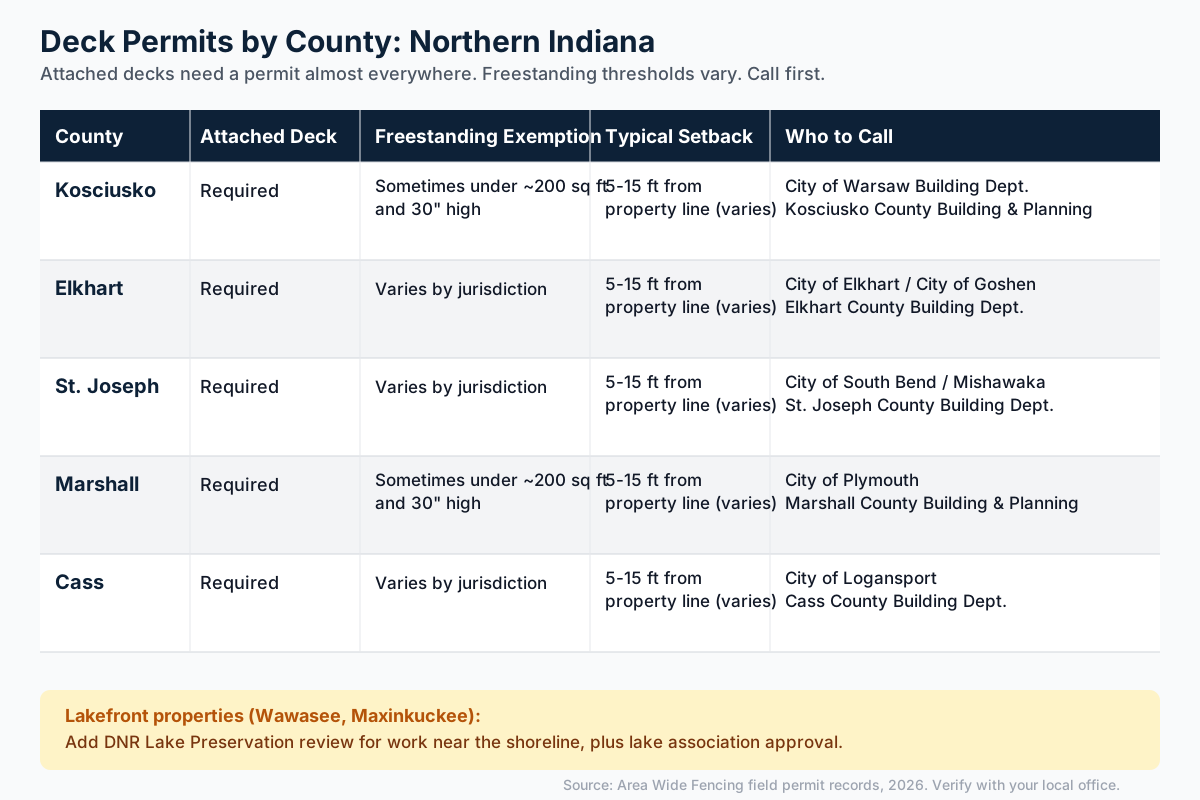
If you’re weighing a deck around the pool at the same time, permitting for that runs on a separate track with its own county rules. Our county-by-county deck permit guide covers that process.
A compliant barrier isn’t only a permit checkbox, either. Insurance carriers frequently ask about pool fencing when underwriting a policy, and an uninspected barrier is a real liability exposure if a neighbor’s child gets into the pool area. Indiana’s attractive nuisance law holds property owners to a higher standard around pools, and a code-compliant, inspected barrier is the strongest practical defense you have.
Three materials cover almost every pool fence we install.
Aluminum is the default for a reason. Pool-rated product lines are built to code from the factory, with picket spacing that already meets the 4-inch sphere rule and hardware built for self-closing, self-latching operation. It also lets you watch the pool from the house, which matters as much as the code does. See our aluminum fencing options.
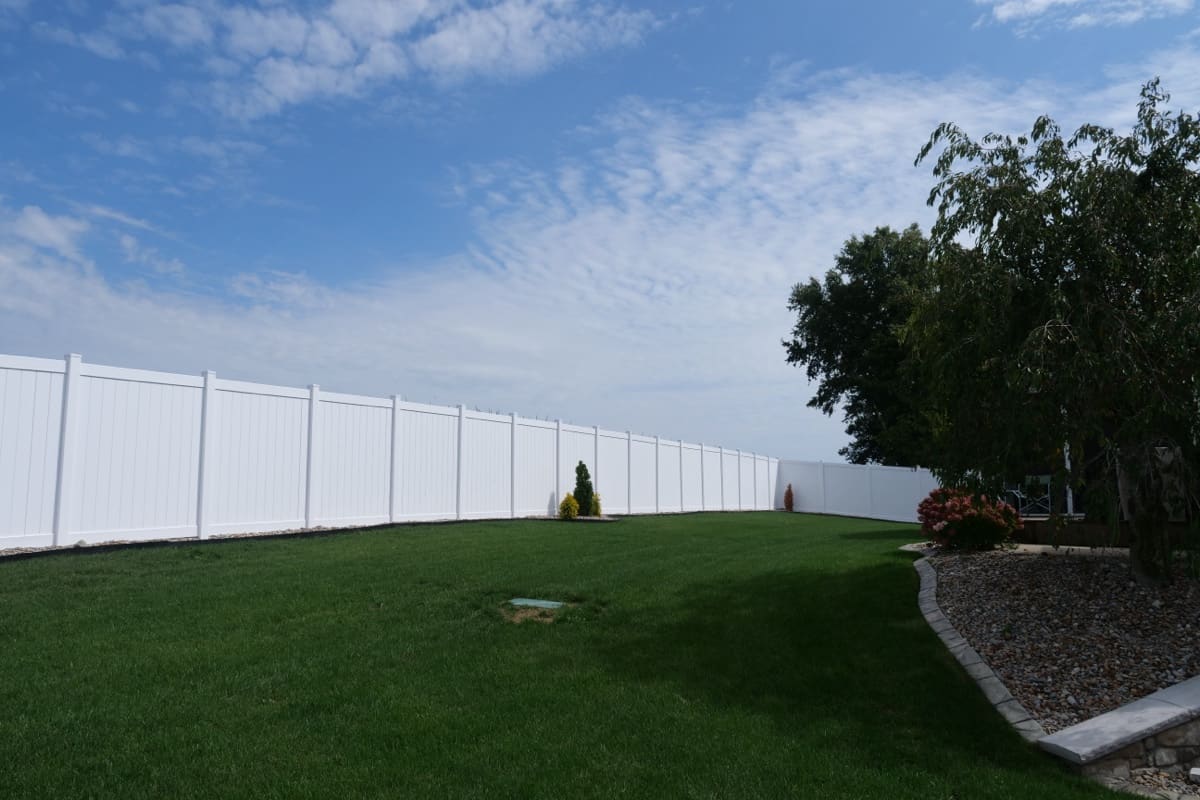
Vinyl works too, and it’s the right call when a homeowner wants privacy around the pool as much as compliance. A privacy panel at the right height with code-rated gate hardware satisfies the same requirement while screening the pool from the yard next door. Full vinyl fencing details here.
Chain link can pass code, but mesh size matters more than people expect. Standard 2-inch diamond openings are well under the 4-inch sphere limit, so a properly tensioned fence at 48 inches with a compliant gate can meet the requirement. The catch is sagged or damaged fabric can open gaps wide enough to fail. We don’t recommend it as a first choice for pool barriers, but it’s a legitimate budget option if maintained correctly.
Deciding between vinyl and aluminum for the whole property, not just the pool? Our full vinyl versus aluminum comparison walks through privacy, cost, and lakefront considerations. For current pricing and styles, see our aluminum fence cost and styles guide.
If you already have a fence around your pool that’s failing or close to failing inspection, the question is whether to patch it or replace it. A few things push toward replacement rather than repair:
If it’s one gate or a section of settled fence line, we can usually repair it in a single visit. If the whole barrier predates current code, replacement is the more honest answer, and the one that actually holds up at inspection.
A meaningful share of our pool fence work isn’t primary residences. It’s lake homes around Syracuse and Wawasee, plus larger properties near Granger. Those owners are on-site part of the year, and they need the barrier finished without being around to manage it.
For second-home owners, we handle the permit paperwork and schedule around the pool contractor’s timeline. We send photos at each stage, so there’s no surprise when they open the house for the season. The barrier meets the same checklist whether the owner is there every weekend or twice a summer. County inspectors don’t grade on a curve for absentee ownership.
If pets are also part of the picture at the lake house, note that a pool-code aluminum fence and a dog-secure fence solve different problems. Our guide to the best fence for dogs in Northern Indiana covers what changes when containment, not just code, is the goal.
A short list to work through with your fence contractor and county before the first post goes in the ground:
We answer all four on every pool consult. If you’re not sure where to start, our fencing FAQ covers the broader questions homeowners ask before any fence project.
If you’re planning a pool for next season, get the fence quote before you finalize the pool contract. Barrier requirements affect where the pool can sit and where gates can go, and it’s cheaper to plan around that than redesign a fence around a pool that’s already poured. Reach out for a quote and we’ll walk the property with you.
Yes, for any in-ground pool and most above-ground pools with a permanent water depth over 24 inches. The barrier can be a standalone fence, a wall of the house, or the pool structure itself if it meets the height and access requirements in our dimension checklist above.
Not usually. A spa or hot tub with a lockable, ASTM-rated safety cover typically satisfies the barrier requirement on its own. Once the cover comes off for regular use, most inspectors expect a fence or an equivalent barrier.
48 inches minimum, measured from finished grade on the outside of the barrier. Some counties inspect to a stricter local amendment, so we confirm the exact number with the local building department before we quote height for aluminum or vinyl pool fencing.
Yes. Many Northern Indiana homes use the house wall as one side and fence the rest of the perimeter. Doors that open toward the pool from that wall usually need an alarm or a self-closing, self-latching device to satisfy the code.
Aluminum is the standard choice because pool-rated product lines ship with code-compliant height, picket spacing, and gate hardware built in. See our full vinyl versus aluminum comparison for how each material handles privacy and cost alongside code.
In most Northern Indiana counties, no. The barrier is reviewed as part of the same pool permit, and the final inspection typically happens before the pool is allowed to hold water. Deck permitting for a pool deck runs on its own track, covered in our county-by-county deck permit guide.
A Warsaw contractor's guide to picket fence caps, top lines, heights, spacing, and materials for front yards in Warsaw and Winona Lake, Indiana.
Do you need a deck permit in Northern Indiana? Usually yes. See the Indiana code baseline, county-by-county rules, and exactly who to call before you dig.
How fence installation works in Warsaw, IN, from permits and utility locates to post setting and final walkthrough.
Contact Area Wide Fencing & Deck Supplies for a free on-site estimate in Northern Indiana.