Local News
Indiana Pool Fence Requirements: What Code Actually Says
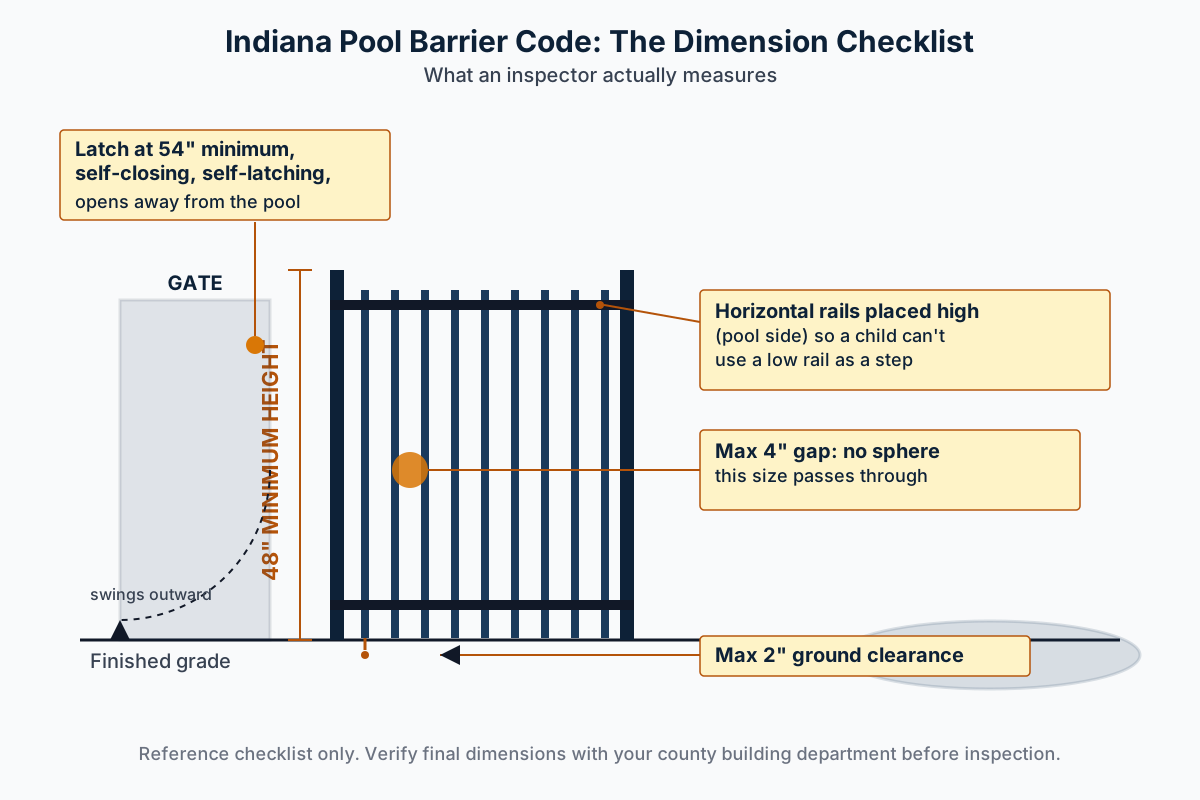
Indiana's pool barrier code covers height, gaps, gate hardware, and inspections. Here's the checklist inspectors actually use, county by county.
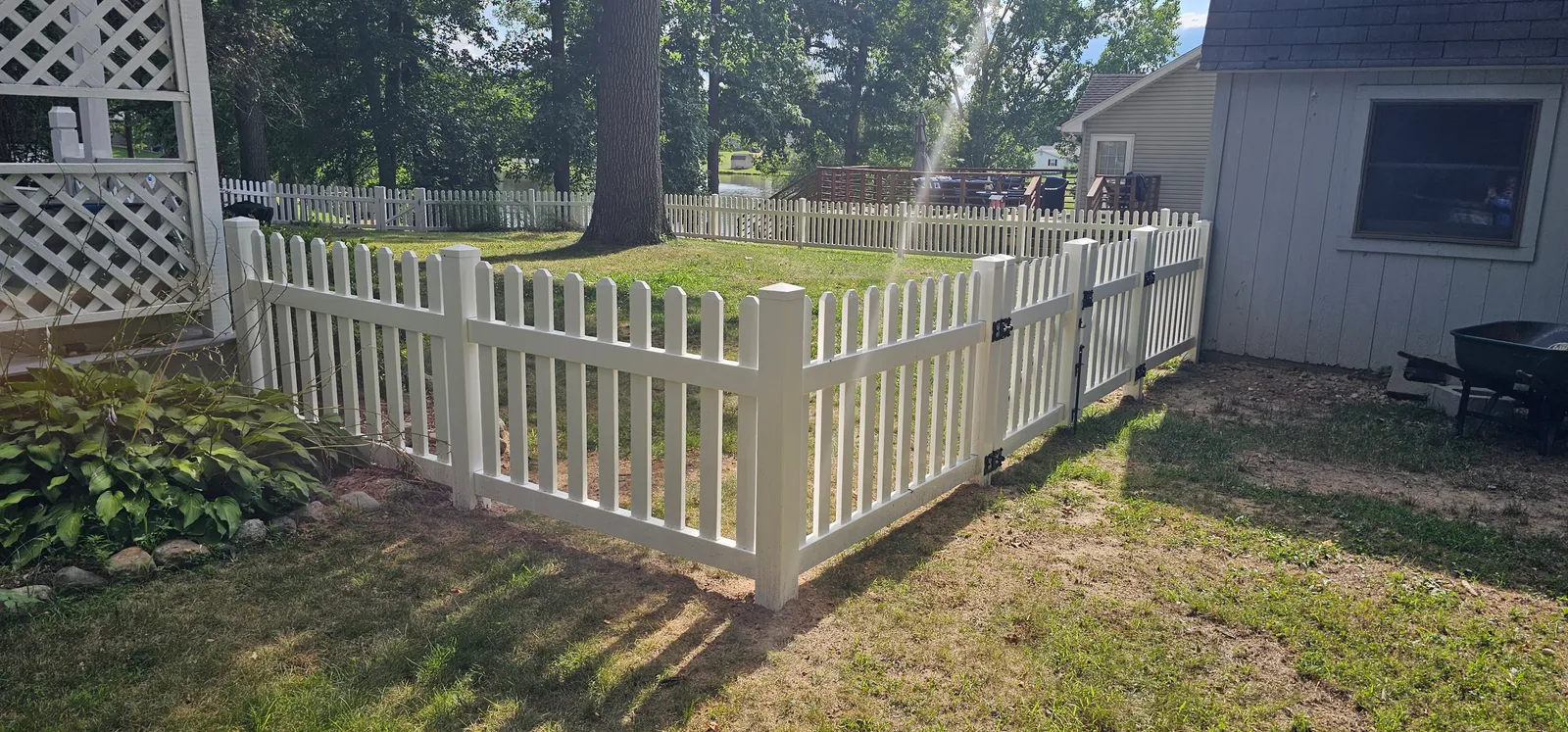
A picket fence in Warsaw usually means a 3 to 4-foot fence with spaced uprights and a shaped cap. It comes in vinyl, wood, or aluminum. The top line is either straight, scalloped, or arched. The choice comes down to your street’s character, your lot’s corner rules, and how much upkeep you want.
I’ve built picket fences across Lincoln Park, Center Lake, downtown Warsaw, and the cottage streets around Winona Lake for 15 years now. Picket work is different from a privacy job. Every board is visible from the sidewalk, and the neighbors notice the cap style before you finish hanging the gate.
This guide covers cap shape, top line, height, spacing, material, and the local rules that decide what you’re allowed to build. Our picket fence installation page covers the build itself and the permit we pull for it.
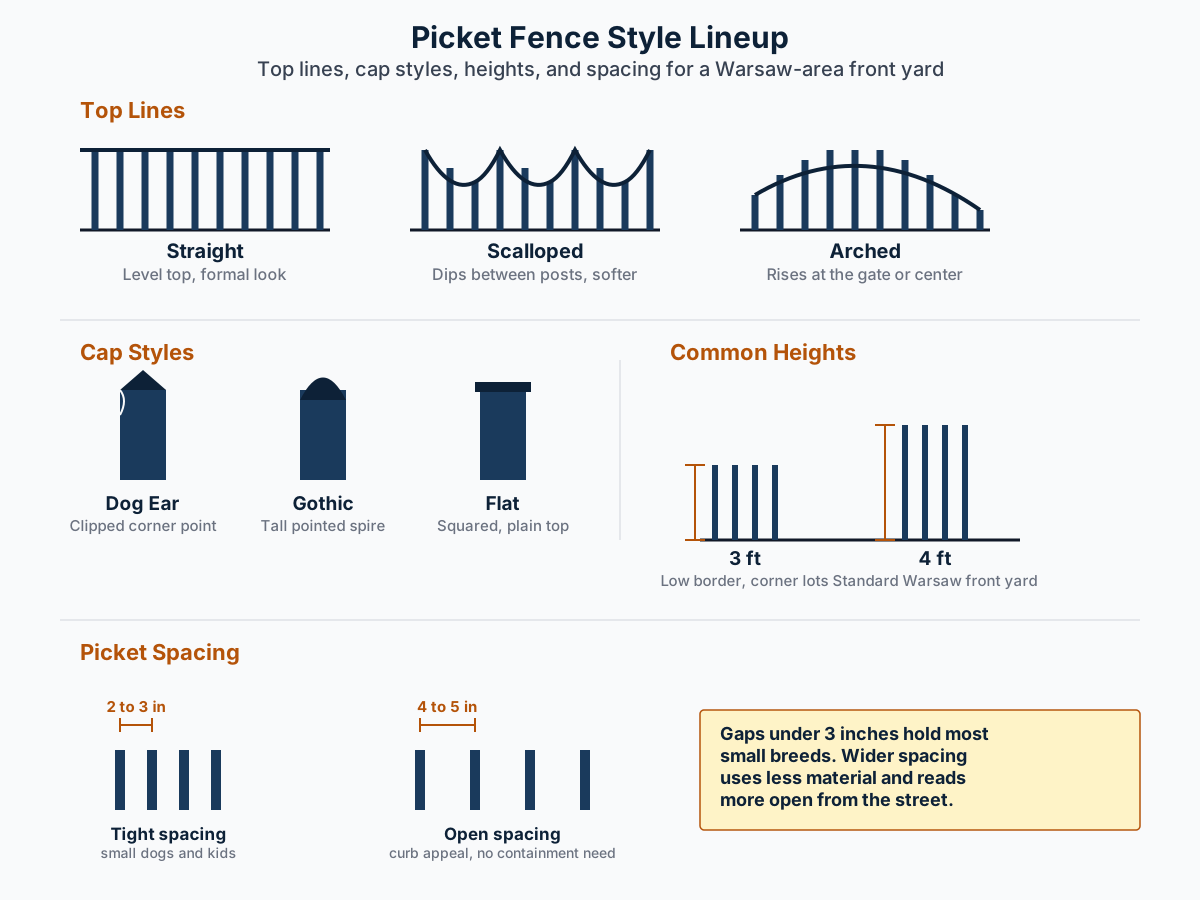
The cap is the shaped top of each picket, and it sets the fence’s whole personality. Dog ear caps have one corner clipped at an angle, a slightly rustic, informal look that’s the most common cap on older Warsaw streets. Gothic caps rise to a tall point, like a small church spire, reading as more traditional or Victorian, which fits the older homes around downtown Warsaw and Center Lake.
Flat caps are squared off, no shaping at all. They’re the plainest option and the default on new subdivision construction, fast to produce and clean against modern siding.
None of these caps change how the fence performs. It’s purely a look decision, worth five minutes with a sample panel before you commit.
A straight top line keeps every picket the same height, running level from post to post. It reads formal and clean. It’s also the easiest style to keep looking sharp over a long run, since there’s no dip or peak to throw off when the ground isn’t perfectly level.
A scalloped top line dips down between each pair of posts, so the fence rises at the post and falls in a shallow curve in between. This is the softer, more cottage-style look, and it’s the one we used on the Lincoln Park picket job in Warsaw, which I’ll get into below.
An arched top line does the opposite of scalloped. It rises toward the center of each span or over a gate, giving a slight peak instead of a dip. Arched sections show up most often centered over a walk gate, as a small design accent rather than the whole fence line.
Four feet is the standard front-yard picket height across Warsaw, matching the city’s front-yard fence cap. Three feet is the lighter option. Homeowners pick it when they want a border more than a barrier. It’s also the safer choice on a corner lot, where it stays clear of any sightline questions before they come up.
Spacing between pickets runs anywhere from about 2 inches up to 5 inches, and it changes function, not just style. Tighter spacing, under 3 inches, holds back small dogs and toddlers. Wider spacing uses less material per foot and lets more light and view through, which matters if the fence is doing curb-appeal work rather than containment work.
The diagram below lays out the caps, top lines, heights, and spacing side by side.
Corner lots carry an extra rule most homeowners don’t find out about until they’re already planning the fence. Near a street intersection, cities including Warsaw restrict fence height inside a sightline triangle measured back from the corner, so drivers pulling out can actually see oncoming traffic. That triangle can knock a 4-foot allowance in the rest of the yard down to something shorter right at the corner.
This isn’t a formality. A layout planned around the wrong assumption means re-planning the corner section, and sometimes reordering material, after the crew is already on site.
All three materials come in picket profiles, and each one solves a different problem for a Warsaw front yard.
Wood picket has the warmest, most traditional look, and it’s the cheapest material upfront. The tradeoff is maintenance. Kosciusko County runs through roughly 35 freeze-thaw cycles a winter, and every one of them works on exposed wood grain. A wood picket fence needs repainting or resealing every two to three years to stay ahead of cracking, cupping, and gray weathering. Skip that upkeep and a wood fence starts looking rough well before the vinyl or aluminum version of the same fence would.
Vinyl picket is the low-maintenance default for most of our residential picket jobs. It doesn’t absorb water, doesn’t need paint, and holds its top line for decades without warping. Vinyl is also behind most of the scalloped and arched top lines on newer Warsaw picket fences. The panels are molded to hold a shaped top cleanly. For the full lineup of vinyl styles beyond picket, including privacy, semi-privacy, and ranch rail, see our vinyl fence styles guide.
Aluminum picket gives the thinnest, most open profile of the three. The uprights are narrower than wood or vinyl, so the fence reads as an outline rather than a solid presence from the street. It’s the pick for homeowners who want a boundary marker without much visual weight. It costs more per foot than wood, and we cover the real numbers in our aluminum fence cost guide rather than repeat them here.
| Wood picket | Vinyl picket | Aluminum picket | |
|---|---|---|---|
| Upfront cost | Lowest | Mid-range | Highest |
| Maintenance | Repaint or reseal every 2-3 years | Hose it down | Hose it down |
| Freeze-thaw performance | Cracks, cups, and grays without upkeep | Holds shape and color | Holds shape and finish |
| Visual weight | Warm, traditional | Crisp, classic | Thin, minimal |
| Best shaped tops | Straight, some scalloped | Scalloped and arched hold cleanly | Straight, simple curves |
Post depth and footing engineering are the same conversation regardless of which material sits on top. For the deep dive on how we set posts against Kosciusko County’s frost line and clay, see our post material comparison.
The clearest local example of a picket job done right is the 300-foot vinyl picket fence we installed in Warsaw’s Lincoln Park neighborhood. The homeowners wanted room for their dog to run and a barrier between the yard and the neighborhood pond behind the lot, without losing the water view from the deck.
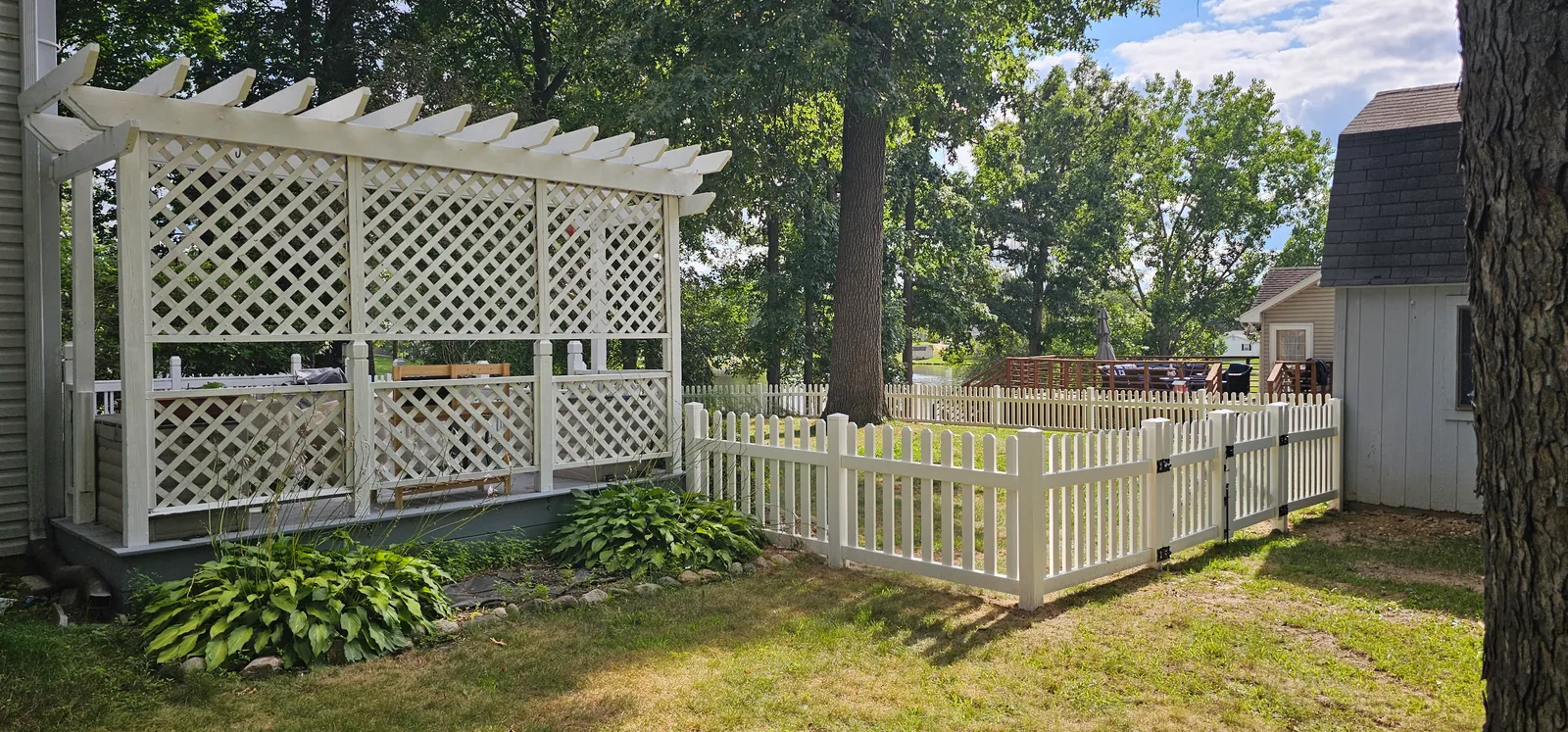
A scalloped top line on vinyl picket solved both goals. The open gaps between pickets kept the pond visible, while the fence line itself gave the dog and two young kids a boundary they couldn’t wander past. The crew hung one 8-foot double-drive gate for mower and trailer access, plus one 3-foot walk gate off the deck. That’s the same width split we recommend on most residential picket jobs. A wide gate for equipment, a narrow one for foot traffic.
Lincoln Park’s lots roll like most of the ground in this part of Kosciusko County. So the panels were angled to follow the slope instead of stepping down in stages. The top line still reads level even where the yard isn’t. That detail matters more on a picket fence than a privacy fence, since every angle change stays visible through the open spacing.
Winona Lake’s cottage streets are a different design problem than a standard Warsaw subdivision lot. Lots are small, houses sit close to the sidewalk, and porches face the street. That puts every front-yard fence on constant display to walkers heading down to the lake or the Village at Winona shops.
A picket fence fits that character better than almost any other style. It marks the property line without walling off the porch conversation with a neighbor walking by, which matters in a district built around walkability and porch culture. Three feet is common on these smaller cottage lots. The setback from the sidewalk is tight, and a shorter fence keeps the scale right against a small house.
For the wind, moisture, and lot-specific factors that come with building this close to the water, see our lakefront fencing coverage for Winona Lake and our Winona Lake service page.
Picket fences clear HOA review more often than almost any other style. They don’t block sightlines to a neighbor’s yard, and they don’t change a street’s overall look the way a solid privacy panel does. White and tan are the safest color submissions across the subdivisions we work in.
Where HOAs get particular is height and cap style. Some newer developments specify flat-top only, to keep every front yard uniform. Older, less formal associations tend not to care as long as the fence stays under the height cap. Pull your association’s guidelines before ordering material. It’s a five-minute check that saves a redo.
Every picket fence needs at least one gate, sized to how you actually use the yard, not a default number. A 3-foot walk gate is standard for a person walking through, wide enough for a stroller or a wheelbarrow without being oversized. 4-foot gates work for a single mower pass. Anything from 8 to 12 feet is a double-gate opening for a mower and trailer or driveway access, which is what the Lincoln Park job used on its drive side.
Hardware matters as much as width, since the gate gets used daily and sits at eye level. We spec black anodized hinges and latches on most vinyl and aluminum picket jobs, since the finish won’t chalk or rust against white or tan panels. Our full gate options page covers hardware, widths, and automation for wider drive openings.
Run through these four questions in order and the decision usually gets clear fast.
What’s the fence actually for? A property-line marker with curb appeal points toward straight-top picket at 4 feet. A softer, cottage look points toward scalloped vinyl. A minimal boundary that barely registers from the street points toward aluminum.
What’s your budget tolerance for upkeep, not just install day? Wood is the lowest number upfront but asks for real time and money every few years. Vinyl and aluminum cost more upfront and ask for almost nothing after, with aluminum at the top of the range. Our aluminum cost guide and vinyl styles guide break the real numbers down further.
Is the lot a corner lot? If yes, confirm the sightline triangle before settling on a layout, since it can override the height you’d otherwise be allowed.
Does an HOA govern the property? If yes, pull the guidelines before ordering anything. Picket clears review more often than not, but color, height, and cap style can still be restricted.
Want to see the material and cap options in person before deciding? Our project gallery has real installs across Warsaw and the lake towns. Our vinyl fencing page and wood fencing page both cover the full product lines behind this guide. You can also read more about how we approach every job on our about page.
Four feet is the norm for a front-yard picket fence in Warsaw, matching the city’s front-yard height cap. Three feet works for a lighter border look, especially on corner lots where sightline rules apply.
Yes, fences inside Warsaw city limits need a permit, including picket fences. The Warsaw Building Department reviews height, setback, and sightline before approving the application, so confirm before you dig.
Vinyl holds up better through Kosciusko County’s freeze-thaw cycles and never needs repainting. Wood costs less upfront and keeps a warmer, more traditional look, but expect to repaint or reseal it every few years. See our wood fencing page and vinyl fencing page for the full comparison.
Dog ear and gothic caps show up most in older Warsaw neighborhoods, while flat-top caps are common on newer subdivision builds. All three are typically HOA-approved wherever picket fencing is allowed at all.
A 3-foot walk gate is standard for foot traffic and matches most single-door widths, making it easy to move a mower or stroller through. Wider gates, from 4 to 8 feet, are for driveway or yard-equipment access. Our gate page covers hardware and sizing options in full.
Yes, but corner lots carry extra sightline rules near the street intersection that limit fence height in that triangle, even if the rest of the front yard allows 4 feet. Check with the city before setting posts, especially if you’re near Winona Lake’s tighter cottage-district lots.
Indiana's pool barrier code covers height, gaps, gate hardware, and inspections. Here's the checklist inspectors actually use, county by county.
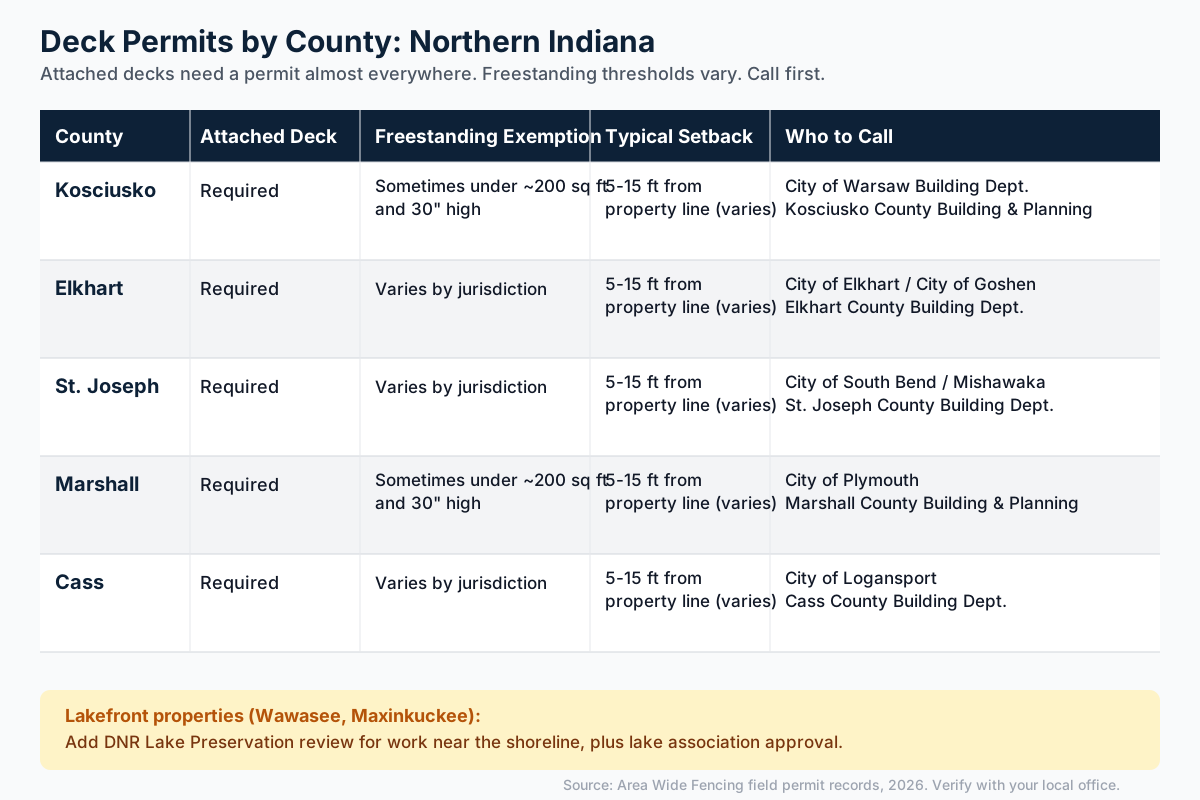
Do you need a deck permit in Northern Indiana? Usually yes. See the Indiana code baseline, county-by-county rules, and exactly who to call before you dig.
How fence installation works in Warsaw, IN, from permits and utility locates to post setting and final walkthrough.
Contact Area Wide Fencing & Deck Supplies for a free on-site estimate in Northern Indiana.