Tips & Advice
Best Dog Fence for Northern Indiana Yards, by Size
Fence height and material by dog size and drive, from puppy pickets to husky-proof vinyl, with the Northern Indiana snow-drift problem factored in.
Railroad tie fences work best for driveway entrances, rural property corners, and boundary markers where the rustic look matters more than a tight budget. Creosote treatment makes them a poor fit near gardens, wells, or anywhere kids and pets spend time. For most residential jobs, heavy timber post-and-rail gets the same look without the trade-off.
I’ve been setting posts in Kosciusko County clay for 15 years, and railroad ties come up in conversation more than almost any other fence idea. Someone drove past a farm outside Rochester or Logansport, saw a tie fence holding up fine after 30 years, and wants that look on their own property. I get it. Ties look like they mean business.
What I tell people is the same thing every time: ties are a real option for the right application, and a bad one for most others. This post covers where ties still make sense around here, and what creosote actually means for your yard. It also covers what it takes to source and install them, and what we build instead when someone wants the look without the trade-offs.
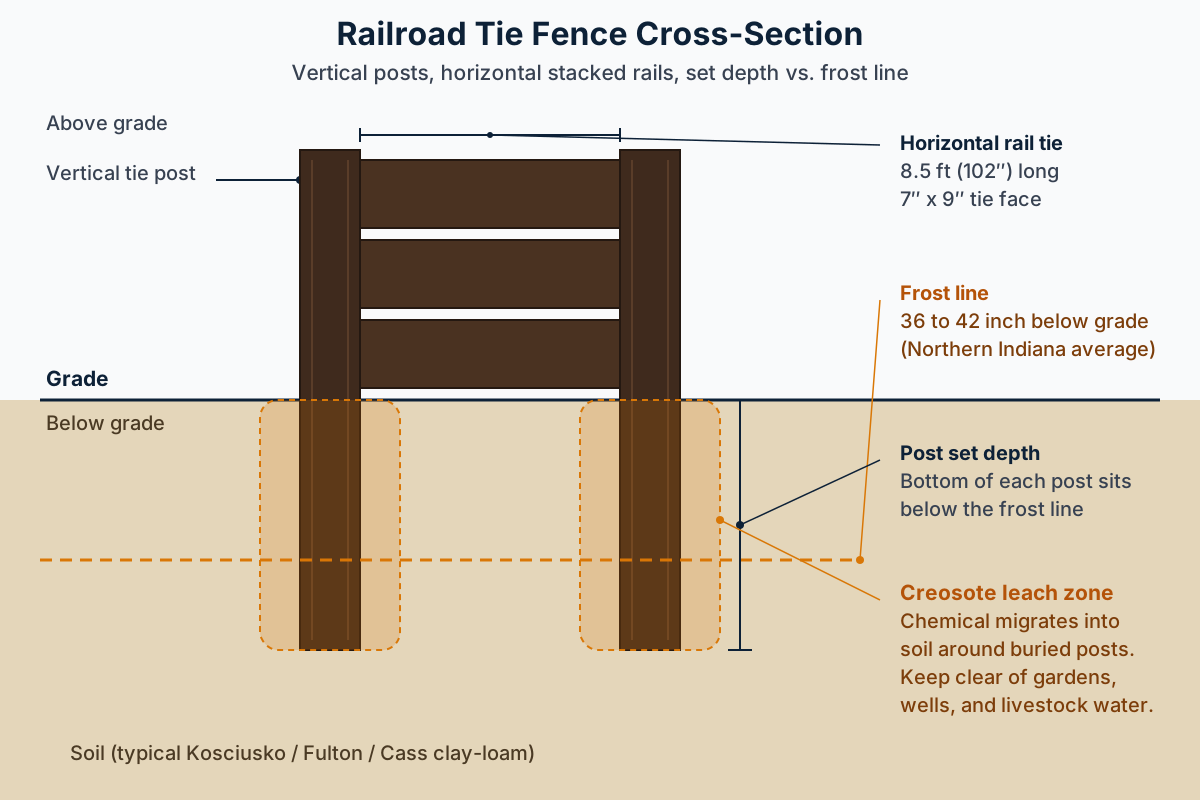
A standard railroad tie runs roughly 7 inches by 9 inches by 8.5 feet, and weighs somewhere between 175 and 250 pounds depending on how much moisture it’s holding. The posts go in vertically, usually cut-down tie sections rather than full-length ties, with one end set below the frost line. The look people actually picture comes from the rails: full 8.5-foot ties stacked flat, horizontally, between the posts, two or three high. Builders attach them one of three ways. Notched into the post faces. Bolted straight through. Or sandwiched between a doubled-up post on each side, so the rail ends sit clamped between two uprights instead of fastened to one.
That’s a very different animal than a 4x4 wood post and rail. The diagram below shows three things. How the posts sit relative to our 36 to 42 inch frost line. How the horizontal rails stack between them. And where creosote migrates into the soil around a buried post.
The applications that hold up are narrow, and they’re mostly rural. A pair of ties flanking a gravel driveway entrance outside Rochester reads as a landmark, not just a post. A property corner along a county road near Logansport or Knox marks the line without pretending to be decorative. A short run along a farm lane, away from the house and away from any well or garden, does the job ties were built for.
What these applications have in common is distance. Distance from the house, distance from anywhere people garden or kids play, distance from a well casing. Ties work well as heavy, weatherproof boundary markers in the rural corridor around Rochester, Logansport, and Knox. Properties there run large, and a fence line might sit hundreds of feet from any structure.
Creosote is what makes a railroad tie last decades outdoors, and it’s also the reason the material comes with real limits. The EPA restricts creosote-treated wood from certain residential reuse, specifically flagging contact with food crops, gardens, and drinking water sources as a concern. That guidance is real federal policy on the product, not internet rumor.
In practice, that means three things for a homeowner considering ties. First, don’t put them anywhere near a vegetable garden or fruit trees. Second, keep them well clear of well casings and any area with shallow groundwater, which describes a fair amount of ground around our lakes. Third, expect a smell. Creosote off-gasses more in heat, and a fence line of reclaimed ties can carry a noticeable tar smell on a hot July afternoon, especially after rain.
None of that makes ties dangerous to have on a property. It makes them a material with a specific, limited use case rather than a general-purpose fencing product. A rural corner post 300 feet from the house is a different decision than a fence line six feet from a swing set.
Most residential tie fences use reclaimed railroad ties, since new ones are harder to find and pricier. Reclaimed ties typically run $10 to $25 each depending on condition, region, and who’s selling them. Select-grade or newer ties can run $30 to $45.
Condition varies a lot from one batch to the next, which is the real risk in sourcing. Here’s what we check before recommending any batch to a client:
| What to inspect | Why it matters |
|---|---|
| Splitting along the grain | A split tie loses structural strength and won’t hold hardware well |
| Soft or spongy spots | Signals rot has already started underneath the creosote layer |
| Heavy creosote weeping | Fresh, oversaturated ties smell stronger and leach more in the first few years |
| Consistent dimension | Ties from different rail lines vary in size; mismatched posts look sloppy |
| Metal fragments (spikes, plates) | Reclaimed ties often still have old hardware embedded that needs removal |
Buying a full fence line’s worth of matched, sound ties takes more legwork than most homeowners expect. We source through the same suppliers we use for other reclaimed timber, and we still reject a meaningful percentage of any batch for rot or splitting. If you want to run the project yourself, we can source ties and heavy timber through our wholesale supply counter in Warsaw. That beats gambling on a random online listing.
A single tie at 200-plus pounds is not a two-person, post-hole-digger job. Setting a tie fence means moving and standing dozens of posts that heavy. It means digging holes deep enough to clear the frost line for material that dense. And it means getting horizontal rail ties into position without crushing a hand.
We use mechanical post-setting equipment and a crew built for the weight, not hand tools. A homeowner attempting this with a rented auger and a couple of friends is taking on a job that professional crews approach with equipment for a reason. Add in the digging depth required below our 36 to 42 inch frost line, and the labor on a tie fence often costs more than the material.
When someone wants the rustic, heavy-timber look without the creosote question, we build heavy timber post-and-rail fencing instead. It’s rough-sawn wood, sized to match the chunky visual weight people associate with railroad ties, without the sourcing headaches, the smell, or the EPA guidance to work around.
Rough-sawn cedar or treated pine post-and-rail gives you the same rural, hand-built character at an entrance or a property corner. It’s also a material we can match, repair, or extend down the road. If a section gets damaged by a storm, a vehicle, or just age, our fence repair team can replace a rail or a post. No hunting down a matching reclaimed tie.
| Factor | Railroad tie fence | Heavy timber post-and-rail |
|---|---|---|
| Material cost per post | $10 to $45 per tie | New rough-sawn lumber, consistent pricing |
| Weight per post | 175 to 250 lbs | Substantially lighter, standard equipment |
| Creosote / chemical concern | Yes, EPA-flagged for garden and water contact | No, standard treated or untreated lumber |
| Summer odor | Noticeable in heat | None |
| Sourcing consistency | Variable, depends on reclaimed supply | Consistent, ordered to spec |
| Future repair matching | Difficult, ties vary batch to batch | Straightforward, standard lumber sizes |
| Best fit | Rural corners, driveway entrances, away from wells/gardens | Anywhere, including near the house |
We can quote a rough per-tie material cost, which we covered above. We won’t lay out an installed price-per-foot table here, because it depends heavily on which fence type you land on. If you’re weighing ties against a steel-post system, our piece on Postmaster steel posts vs. wood covers that comparison directly. If the property in question runs livestock, field fence vs. woven wire for hobby farms is the more relevant read, since ties by themselves don’t contain animals.
Budget the tie material cost, then price labor separately. The weight of the material drives labor hours up regardless of what the ties themselves cost. For most residential budgets, heavy timber post-and-rail lands in a more predictable range because the lumber is uniform and the crew isn’t wrestling 200-pound posts all day.
If your tie fence needs a gate, that’s worth planning before you buy a single tie. Gate hardware doesn’t hang well off inconsistent, reclaimed material the way it hangs off a squared timber post. We handle gate installation as its own line item on any fence quote, tie or otherwise. A gate that sags in year two undoes the whole look of the entrance.
Inherited a tie fence from a previous owner that’s past its usable life? Removal is its own project, mostly because of the weight and the creosote-treated wood disposal rules. We cover the full breakdown, including what drives cost up or down, in our guide to fence removal costs in Northern Indiana.
Ties aren’t the only wood option that has to answer to Northern Indiana’s freeze-thaw cycle and lake-effect snow load. If you’re deciding between wood and vinyl generally, not specifically about ties, our comparison on vinyl vs. wood in Indiana winters walks through how each material handles our specific climate.
Fifteen years in, my honest read is that railroad ties are a great-looking material with a narrow, legitimate use case and a lot of hidden cost outside it. For a driveway entrance or a rural corner well away from a well or a garden, they can be the right call. We’ll install them if that’s genuinely what a property needs. For anything closer to the house, we steer people toward heavy timber post-and-rail almost every time. It delivers the same rustic weight without the sourcing gamble or the creosote conversation.
You can see examples of the wood fencing styles we build most often in our project gallery, and read more about how we approach fence recommendations on our about page. We’ve been doing this across Kosciusko, Marshall, Fulton, and Cass counties long enough to know which materials age well and which ones age into a problem.
There’s no state law against it, but the EPA restricts creosote-treated wood from certain residential reuse, including anywhere it contacts food crops, gardens, or drinking water. A driveway entrance or a rural property corner away from wells and gardens is generally fine.
Used ties typically run $10 to $25 each depending on condition and source, while newer or select-grade ties can run $30 to $45. A single fence line eats through them fast once you factor in posts, corners, and any horizontal rail ties.
Creosote is a petroleum-based wood preservative, and it off-gasses more in heat. Ties that sat quietly all winter can smell noticeably stronger on a 90-degree July afternoon, especially right after a rain.
We don’t recommend it. Creosote leaches into surrounding soil over years, and the EPA specifically flags food-crop and drinking-water contact as a concern. Keep ties well away from vegetable beds, well casings, and any area with standing or shallow groundwater.
Heavy timber post-and-rail fencing in rough-sawn wood gets you the same weight and character without the creosote question. We build it in cedar or pressure-treated pine, sized to match the chunky look people want from ties, minus the sourcing and disposal headaches.
Below the frost line, which runs 36 to 42 inches across our service area depending on soil and exposure. Railroad ties set as posts need to hit that same depth, which is a lot of buried material to move given how heavy each tie is.
Fence height and material by dog size and drive, from puppy pickets to husky-proof vinyl, with the Northern Indiana snow-drift problem factored in.
Choose the right fence for Northern Indiana weather, soil, wind exposure, and winter freeze-thaw cycles.
Compare vinyl and wood fencing for Northern Indiana winters, including maintenance, lifespan, cost, and freeze-thaw performance.
Contact Area Wide Fencing & Deck Supplies for a free on-site estimate in Northern Indiana.